Author: Gracie Latrelle

  • Raccoons: Hand-Washing Food & Their Environmental Impact!

    One of the most amazing and shocking things that you may not know about raccoons is that they wash their hands and their food before eating it and this is why!
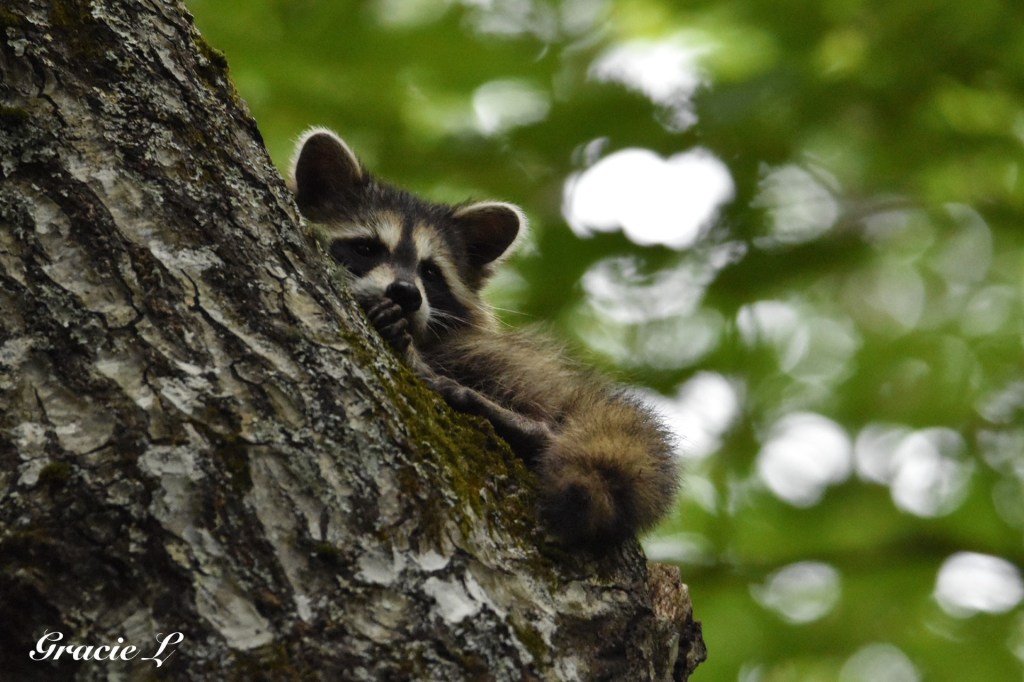
    Raccoons have a tendency when water is available to dunk and dip their food into the water and roll it around in their hands as if they were washing it before they eat.

    Raccoons do this type of behavior because unlike humans, raccoons do not depend on their eyesight to help discover and uncover new things. Instead raccoons depend on using touch to help find out certain information about a specific subject.

    When a raccoon touches an object, it is able to uncover close to two-thirds of that object’s sensory information. As a result raccoons are able to manipulate, hold and interpret objects the same as humans.

    Raccoons have 4 to 5 times more mechanoreceptors than most mammals and are able to use the nerve endings in their paws to help find information about a certian object.

    Not only is the behavior unique within itself, it also helps the environment too!

    Raccoons help to spread seeds and fertilize plants when they wash their food around a certain area. Some scientists believe that raccoons were an important part in helping plants and their seeds disperse throughout the entire United States.

    I hope that you all enjoyed this unique and fun little fact about Raccoons! These masked little bandits are always into something but I think they have also won alot of hearts too!

    I photographed this little darling in the mountains of North Georgia.
  • Black Snakeroot Natural Cures!

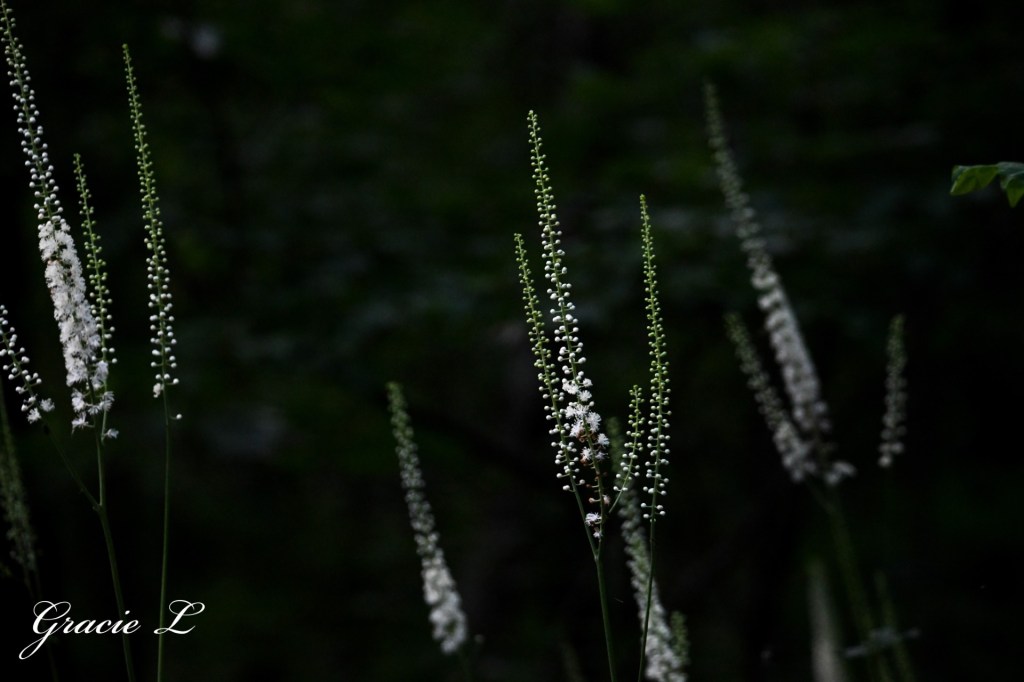
    Black Snakeroot also known as “Black Cohosh” is an Appalachian native wildflower that grows here in the mountains from the state of Georgia all the way to Ontario Canada. It can even be found as far west as Missouri to Arkansas.

    This plant is also classified as endangered in the state of Maine and in Illinois.

    Native Americans used this flower’s root as a medicinal cure for rheumatism, sore throats, malaria and for complications of childbirth.

    The flower’s medicinal values eventually reached the Europeans and became a medicine for menopause symptoms such as hot flashes for over 40 years.

    In the recent years, the recent clinical studies have proved the cohosh to be safe to take and with this the U.S. Drug and Food Administration has placed a need for the black cohosh.

    However, never take something without talking to your doctor first as those who have breast cancer or are pregnant might have severe side effects. Some people may even experience liver damage so it’s always best to consult your doctor first!

    In a one-year period ending in 1998, retail sales increased more than 500%. In 2001 when retails sales in other segments of herbal products were declined, Black Cohosh “Black Snakeroot” increased about 2% to an estimated value of $6.2 million.

    Most of all Black Cohosh is harvested from the wild so it is very important that this plant stay in a secure and stable population.

    The species is listed as “at risk” by conservation groups in the United States but is considered “apparently secure” by ecological ranking on the global and national scales.

  • Bear Safety Tips!

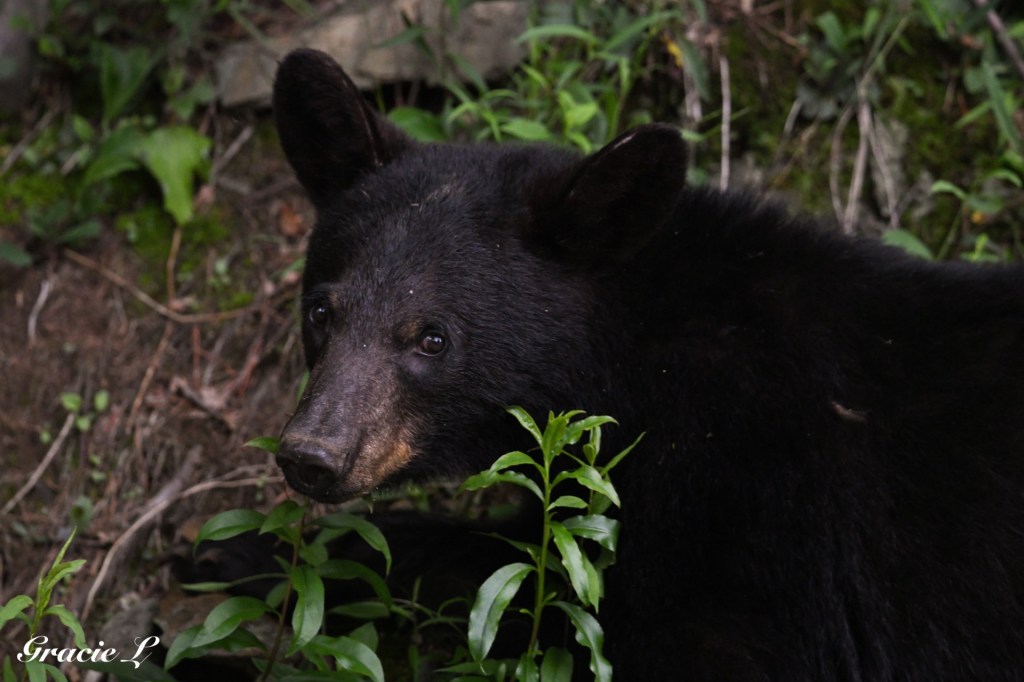
    Black bears, a fierce creature but yet gentle until provoked! So how do we keep these beautiful creatures and our family safe without harming you or the bear while camping? Here are a few ways!

    1. Do Not Feed The Bear!

    Sure, Black bears look cute and cuddly from a distance but don’t let that get to you! Bears are extremely territorial especially with food as it is their natural instincts to compete with other animals for food in the wild.

    2. Leave the bear be!

    Bears are not meant for up-close and personal encounters as this might result in your last encounter! If you find yourself accidently too close, stop, back away from the bear and do not turn your eyes away on the bear as these are wild animals and are extremely unpredictable! If the bear still follows you, make loud noise and make yourself larger than the bear by raising your arms above your head!

    3. Bring Bear Spray!

    This is a last result option but if the bear begins to attack you, spray the bear and the bear more than likely will leave. It’s completely safe for the bear and only requires discomfort for a few minutes.

    4. Lock Your Food Inside Your Car or Camper!

    Food locked away is a bear’s best friend as a fed bear is truly a dead bear! Bears continue to come back to the campground of which they were fed and when you don’t feed the bear, the bear becomes severely angered and can result in an attack!

    5. Don’t Camp in Any Campsite with Leftover Food Left in It!

    It always a good rule of thumb as you don’t necessarily have to be the one who left the food behind but those before who did probably attracted in some kind of wildlife with it which would include bears! So, always be alert when pulling into a new campsite with some leftovers as it might come with a furry guest as well!

    I hope these tips were helpful! Happy Camping Everyone!

  • The Red Wolf That Once Roamed The Appalachians

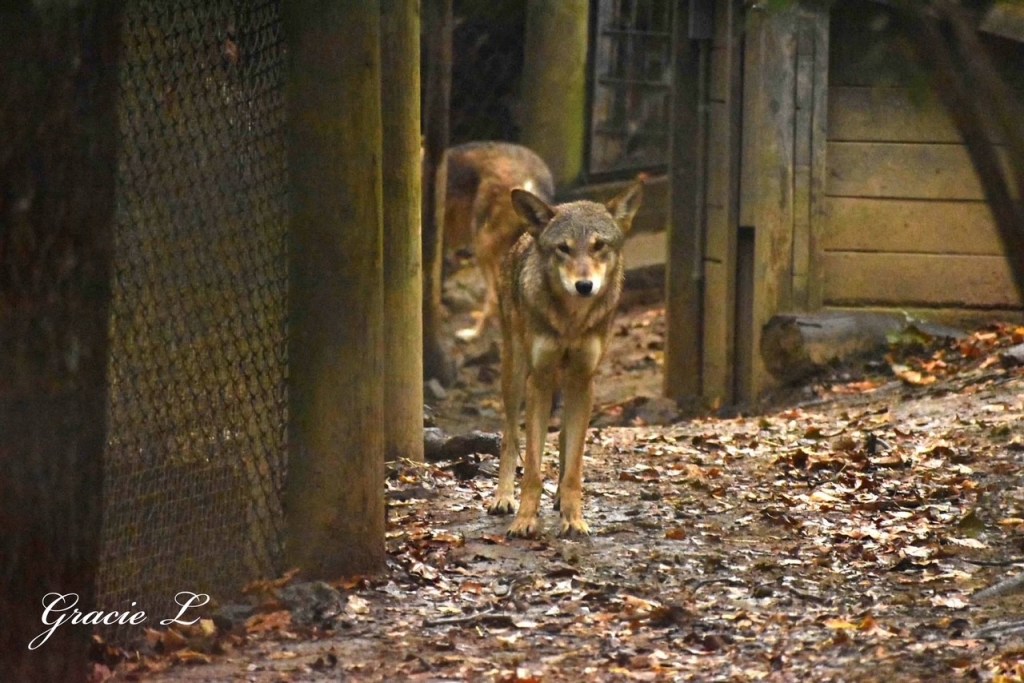
    The Red Wolf once roamed these Appalachian Blue Ridge Hills and the Southeastern United States in abundant numbers. Now there are only 15 to 17 wild Red Wolves in the Eastern United States and only 241 Red Wolves in captivity. Their numbers are truly at an unstable and scary number, but each litter of pups produced is helping this species come back from its critically endangered population.

    Photo by Manuel Fandiu00f1o Cabaleiro on Pexels.com

    Red Wolves once roamed almost the entire Eastern side of the United States including as far North as Pennsylvania and as far South as the Mexico and Texas border. The Red Wolf is known as “America’s Wolf” because it’s the only species that lived entirely within the boundaries of the United States without extending into Canada and Mexico.

    In November 1991, The Great Smoky Mountains National Park released the first Red Wolf family into the park. In 1992 two more families were released in Cades Cove and Tremont. Around 40 Red Wolf pups were born inside The Great Smoky Mountains National Park but sadly parvo became a big issue with the pups surviving to adulthood.

    Struggling with disease and starvation due to the Coyotes competing with the Wolves for food, the park decided that it would be best to end the Red Wolf experiment in The Great Smoky Mountains and to go ahead and recapture the radio collared Wolves. All but one known Red Wolf was recaptured so there’s always going to be that hope that maybe one more unknown Red Wolf remained in the park and the population still might have hopes of returning.

    This all being said keep your eyes peeled in the Appalachians because you never know what you’re going to see!

  • Cherokee Indians Use This Plant to Make Blow Darts!

    Did you know that thistles are not only a great snack for your bird friends but are also used to make blow darts!

    It’s true! The Cherokees use thistles and a wooden shaft to help create the dart.

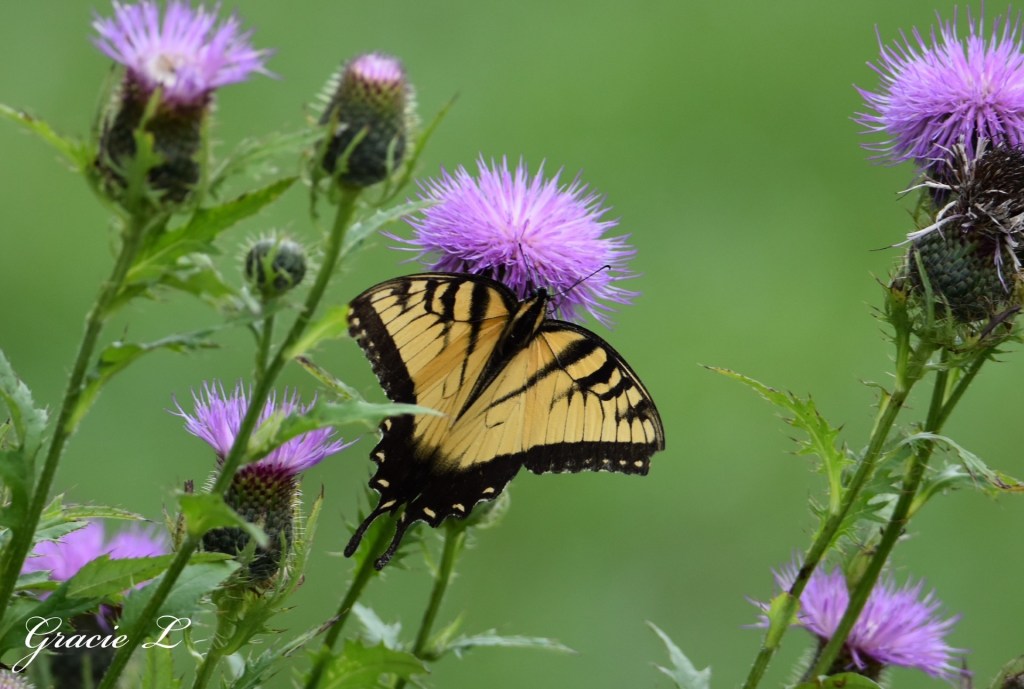
    First, they would harvest the thistle, and you don’t want to pick the thistle while it’s still purple, as you will see in the photo, but you want it instead to be brown. If you pick it while it’s purple, it will more than likely mold.

    Now you all might be wondering why thistle? Thistle is the best material for fletching which is the feathers on a dart or arrow. However, some use cotton if necessarily.

    To make the fletching, you must take a dry thistle bulb and remove the brown seed part from the pod but be sure not to remove the fluffy white down from it as that will form the fletching. Next you have to find a straight wooden rod or skewer and notch it on the top. River cane is a major source for this.

    After that, take quilting thread and knot it on one end and place it inside the notch. Place the downy part of the thistle pod against the stick and wrap the thread around the downy to attach it to the wooden rod or skewer which is now your arrow.

    Tie the end of the thread where the downy ends on the arrow. Roll the arrow in your hands to get rid of any loose downy or seeds and you have officially made yourself a blow dart!

    Keep in mind that some might think that a hard puff of air is required to shoot a dart, but this is actually not the case at all, and all you have to have is a quick burst of air to shoot the dart off.

    Information provided by the Cherokee Phoenix (The original Cherokee newspaper).

  • This Old Timer Trick Keeps Your Plants from Getting Frostbite!

    Have you ever wondered if there is a way to find out when the frost is over for the year? There is and I am fixing to explain how but first let’s dig into what frost is!

    Frost is water vapor or water in a gas form that becomes solid. Frost forms when an outside surface cools down past the dew point. The dew point is the point where the air gets so cold that the water vapor in the atmosphere turns into liquid. The liquid then freezes and if it gets cold enough will produce little pieces of ice. Which then creates frost.

    Frost normally occurs during the night on plants especially flowering plants! Areas with a lot of fog often have heavier frosts making the mountains a prime spot for frost!

    Frost can occur when the temperature falls below 36 degrees Fahrenheit. It is common throughout the rural areas like the Appalachian Mountains as our temperatures most of the year are fluctuating.

    Oldtimers here in the Appalachian Mountains say that the frost is over for the year if the mountain foliage is green to the top. From personal experience, this is true and when the mountain reaches green to the top the frost is over. Our mountains here in North Georgia are getting closer but they just haven’t got there yet as the Dogwood trees are just now beginning to bloom on top of the mountain, but it certainly will not be too long before frost is officially over!

  • The Time to Start Planting Your Garden!

    Me and my family plant our garden by the signs of the moon including the breast, head, neck, arms, legs, knees, heart, belly and etc.

    Each plant does better in different signs. For instance, tomatoes do good when planted when the moon is in Cancer and in the breast, Scorpio in the Secrets and Pieces in the Feet.

    The stages of the moon are extremely important in the plant’s growth and during each month the moon will pass through one of the twelve constellations that make up the signs of the Zodiac.

    One of the best times to plant is during the new moon but just to make sure check your calendar to see what the signs are of the day that you’re planting.

    The first quarter of the moon is a great time to plant annuals who are producing their crop above ground and is normally leafy including broccoli, cabbage, Brussel sprouts, asparagus, celery, corn, cauliflower, lettuce, leeks, oats, parsley, onions and spinach.

    The second quarter of the moon is also a great time to plant annuals who are producing their crop above ground but are of a vine variety that produces their seed inside the crop like beans, melons, eggplants, peas, peppers, pumpkins, squash and tomatoes.

    The third quarter of the moon is great to plant bulbs, roots and perennials. Meaning that it is a great time to plant shrubs, trees, berry baring fruits, artichokes, beets, carrots, onions, parsnips, potatoes, radishes, rhubarb, rutabagas, strawberries, winter wheat, turnips and grape vines.

    Last but not least is the fourth quarter of the moon and during this time it is just best to cultivate your garden, turn the soil, pull weeds and prevent pests as when the moon is in the barren like this the plants will not grow well and these signs include Aries, Leo, Virgo, Gemini, Aquarius and Sagittarius.

    Apple and Pear Tip! Pick your apples and pears in the old of the moon and the bruised spots will dry up and if you picked them in the new moon the spots will rot. Harvest all crops when the moon is growing old as they will keep longer and better.

    I’m just curious to know do you all plant by the signs of the moon?

  • Rare Blue Firefly Species Found in The State of Georgia!

    Did you know that Georgia is home to an extremely rare firefly species!

    Blue Ghost Fireflies can only be found in three places Asheville, North Carolina, the Great Smoky Mountains National Park in Tennessee and in the Cohutta Mountains of North Georgia.

    These fireflies only emerge about two to four weeks each year in late May to early June.

    Unlike other fireflies who only flash for about a second, Blue Ghost Fireflies can be seen glowing and hovering in the sky for about a minute each time.

    So why are they called Blue Ghost Fireflies? Legend has it that the fireflies are the ghosts of Confederate soldiers as a lot of soldiers lost their lives in the areas where you see these fireflies. If you look closely enough to the fireflies it looks like they have lanterns and are carrying them as they are floating through the sky.

    The males are the only ones who can fly and are the ones that you see floating through the air and glowing their blueish-white light. The females do not fly as they never change from their wingless larval stage even after reaching adulthood. Instead, the females crawl up on leaves and other foliage and sit and glow to help the males find them.

    If you get a chance in the coming days and weeks to see these beautiful creatures before they end their beautiful show for the year, I would highly recommend it to anyone!

    My favorite place to view them is the Cohutta Overlook in the Fort Mountain State Park parking lot. They appear right at dusk and stay around for a while.

  • How A Woodpecker Builds a Nest!

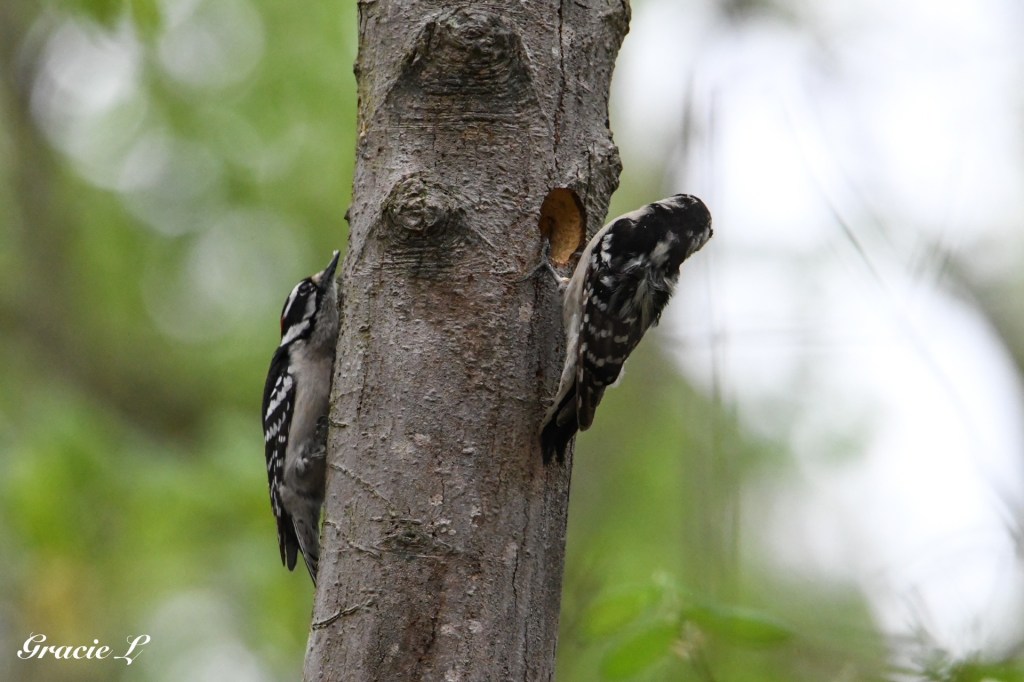
    Have you ever seen the cutest and tiniest black and white woodpecker? If you have, you have more than likely have just spotted a Downy Woodpecker.

    Downy Woodpeckers are a common sight at my feeders and one couple has just recently decided to build a nest in a dead tree just a few feet from the feeders and it got me to thinking how do they build such an extravagant home? Well, we are about to find out!

    Downy Woodpeckers first begin designing their new home by choosing a wooden tree stub no more than 7 inches in diameter and that leans away to provide shelter and provides a place where they can put the entrance on the bottom.

    After choosing their new “treehouse”, the couple will then begin chipping away at the surface of the tree until they form a circular hole at the top of the tree and a circular hole entrance at the bottom. This process takes the couple one to three weeks to complete both taking turns.

    Entrance holes are about 1 to 1 1/2 inches across and the cavities will be 6 to 12 inches deep, and the cavity will widen as it goes deeper inside the nest to provide room for the eggs. The cavity will be lined with wood chips to provide cushion for the eggs.

    After completing the nest, the female will lay 3 to 8 eggs and both male and female will incubate the eggs for about 12 days.

    After hatching, the babies are born naked with pink skin and with their eyes closed. They are also born with a sharp egg tooth which helps the baby to hatch out of their eggshell.

    Both parents will bring the babies a mouth full of insects around the clock to feed the nestlings and the babies will remain with them until they are 20 to 25 days old.

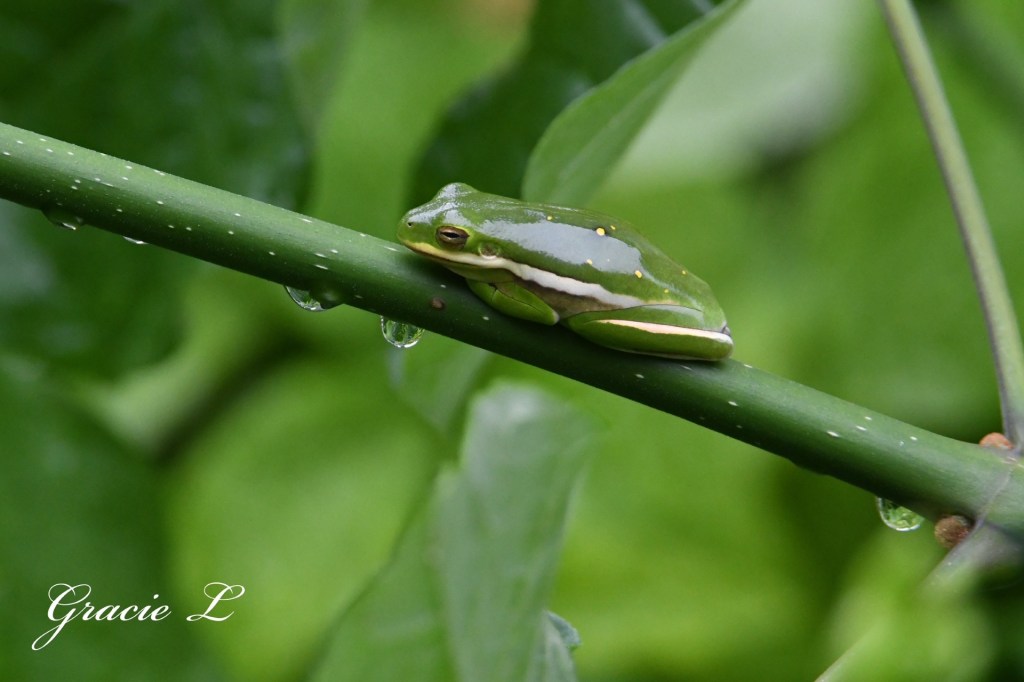
  • Do Warts Come from Frogs and Toads?

    A lot of us were told as kids when we caught these fun amphibians with our hands that we would get warts so is that truly the case or just a myth? Let’s find out!

    According to the University of Georgia there is no scientific evidence of any toad causing warts.

    Toads have warty skin and some of the bumps on their skin produce poisonous substances and many frogs have glands on their skin that produce toxins.

    Warts are actually caused by viruses and not the secretions of which the frog produces from its “warts”. However, some secretions from the frogs and toads bodies can irritate your skin and even give you a rash!

    There are over fifty different types of warts and according to Ripley’s Believe It or Not none of them are caused by frogs nor toads. They instead are caused by the human papillomavirus (HPV) which can cause multiplication of the cells outside your skin which then causes a bump or “wart” to appear.

    Warts are not dangerous though and treating them isn’t usually a problem.

    It’s always still a good idea to sanitize your hands after handling these creatures according to the University of Georgia because even though they cannot give you warts they still can secrete toxins. The Common Gray Tree Frog produces a toxin from their skin and it causes extreme discomfort if it gets into the eyes and nose!

    So, I am just curious after all this research do you guys believe it’s a fact or a myth?