Category: Blog

Gracie Latrelle’s Blog

  • Natural Remedy for Bee and Wasp Stings

    Honeybees, Bumblebees and other insects are working tirelessly working to pollinate each and every flower bloom but while this is occurring, accidental stinging accidents are happening as well!
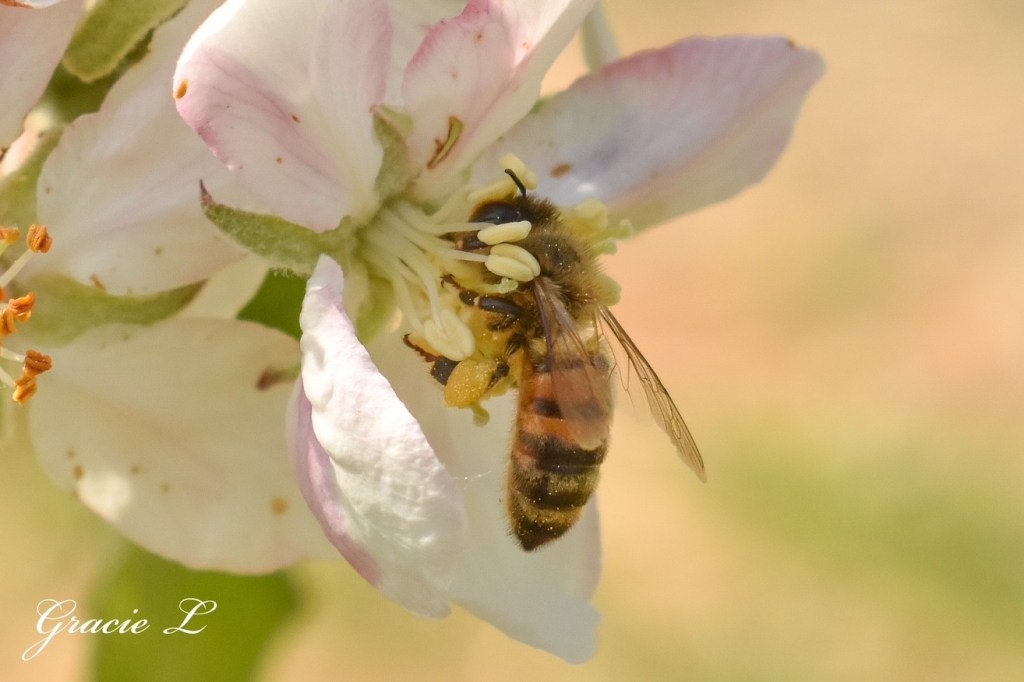
    Bee’s normally sting when they feel threatened or if their home is felt to be in great danger.

    So why does the sting of a bee hurt so bad? Bees have multiple chemical variations including acidic in their venom that they inject through their sting and for some people, the sting will be mild but to those that are allergic to these variations of chemicals, it can be deadly.

    Honeybee’s will normally only sting though if their hive is felt threatened. Worker bees are the only ones beside the queen that can sting. Male honeybees (drones) cannot sting. When a honeybee stings, it’s stinger has a barb and if the victim has thick skin the barb will sometimes get stuck in the victim.

    So how can you help the swelling and the pain from the sting?

    Apple cider vinegar is a great way to break down the venom, prevent infection from the sting and to reduce the swelling of the sight. Take a brown paper bag and soak diluted apple cider vinegar into the paper bag and wrap it around the sting if possible. This should help the sting affected area but if it doesn’t and causes irritation or a reaction stop immediately.

    Also, from someone that has a moderate reaction to bee stings and swells really badly, I recommend taking an antihistamine immediately after the sting happens.
  • Flowers That Will Attract Hummingbirds to Your Garden!

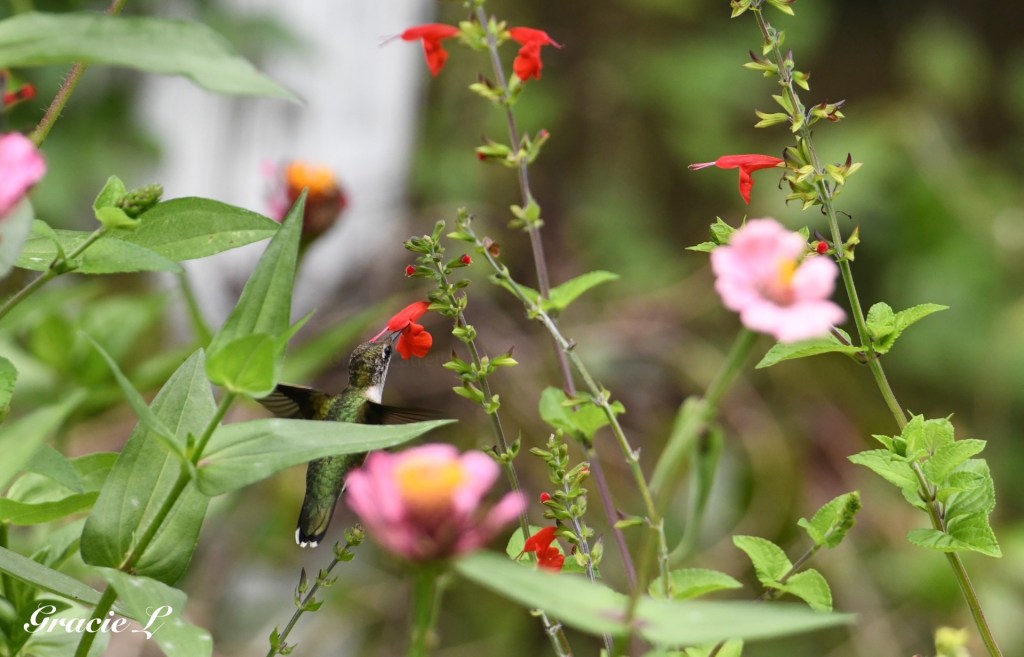
    These are just a few of the many flowers that will attract hummingbirds to your backyard!

    1. Zinnias

    With their beautiful bright colors and tall stems, giant zinnias are a great add to any backyard flower garden when your trying to attract hummingbirds. Also dwarf zinnias are great as well and attract the hummingbirds just as much as the giant ones do!

    2. Red Salvia

    Salvia is one of my personal favorites to add to the pollinator garden as not only does their bright red appearances make your garden pop but the red color also helps attract the hummingbirds to your garden!

    3. Geraniums

    This one I call the “stinky plant” and I’ll explain why in the minute. Just like salvia their bright appearance truly causes your garden to glow with red flowers and with this attracts hummingbirds to your garden. The reason why I call it the “stinky plant” is because when the flower is disturbed it produces an odor that smells very similar to skunk spray.

    4. Petunias

    Petunias is another great add on to any garden who is trying to attract hummingbirds. The hummingbirds love the flowers due to their tubular-shaped appearance and their nectar!

    5. Sunflowers

    Now this one sounds like a weird choice, but hummingbirds truly love sunflowers. You can either purchase seeds in a prepackaged packet or you can just sow bird seed sunflower seeds.

    6. Tomatoes

    I know that this is again a weird choice but hummingbirds love to collect the nectar from the tomato blooms on the vine.

    7. Hummingbird Vine

    Just like its name these beautiful vines that produce trumpet shaped flowers attract hummingbirds very well to your garden.

    8. Butterfly Bush

    Butterfly bushes is a bush that produces a stem with dozens of small flowers attached to the end of each stem and these small flowers produces pollen for hummingbirds to eat!

    9. Hollyhocks

    With their cup shaped flowers, these are a great addition to anyone’s hummingbird garden.

    10. Lupines

    Last but not least is the Lupine. Lupines are flowering plants that have colorful spikes on top of the stem with tubular flowers making them a favorite among hummingbirds.

    I hope this helps all of you who are trying to attract our hummingbird friends!

  • Granny’s Red Velvet Cake: Simple & Delightful!

    2 1/2 cups of self-rising flour

    1 1/4 cup of sugar

    1 teaspoon of baking soda

    1 teaspoon of cocoa powder

    1 cup of buttermilk

    1 1/2 cup of Crisco shortening

    1 teaspoon of white vinegar

    2 eggs, cracked and beaten

    1oz of red food coloring

    1 teaspoon of vanilla extract

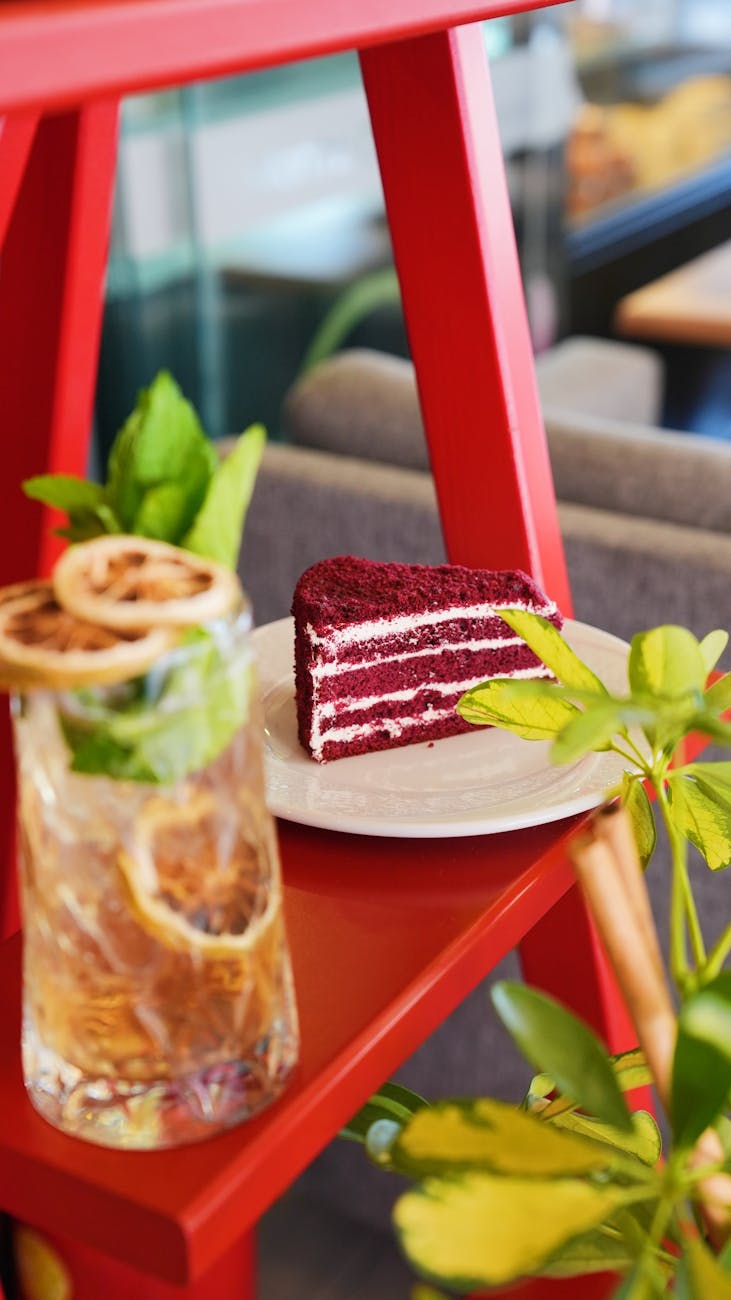
    Photo by Fatih Sucu on Pexels.com

    In a medium mixing bowl combine your 2 1/2 cups of self-rising flour, 1 teaspoon of baking soda, 1 teaspoon of cocoa powder. Mix well and sit aside.

    In another medium mixing bowl add 1 1/4 cup of sugar and the 1 1/2 cup of crisco shortening and mix this together until it is light and creamy. Add 1 cup of buttermilk, 1 teaspoon of white vinegar, 2 beaten eggs and 1 teaspoon of vanilla extract. Mix this together until it is mixed well.

    Add the dry ingredients, a little at a time, to the wet ingredients and mix this together until all of the ingredients are well combined.

    Add in your 1 teaspoon of red food coloring to the batter. Mix the coloring into the batter. Be careful not to spill it on your counter as it is not easy to remove.

    Place your cake batter into two 9″ round cake pans or one 9 x 12 cake pan sprayed with non-stick cooking spray. Tip: if you are using the round pans place a sprinkle of flour into the pans and shake it around the pan. Remove the excess flour from the pan.

    Place the cake into the oven and bake on 350 degrees for 25 minutes for the round pans or 30 – 35 minutes for the 9 x 12 pan.

    Cream Cheese Icing

    8oz of cream cheese, room temperature

    1/2 cup of salted butter, room temperature

    1 pound of powdered sugar

    1 teaspoon of vanilla extract

    In a medium mixing bowl combine the cream cheese and the butter and mix this until it is creamy and smooth.

    Add the powdered sugar and vanilla and mix this on low until it is combined and then mix it on medium until it is smooth

  • Tennessee Is Named from This Underwater Town!

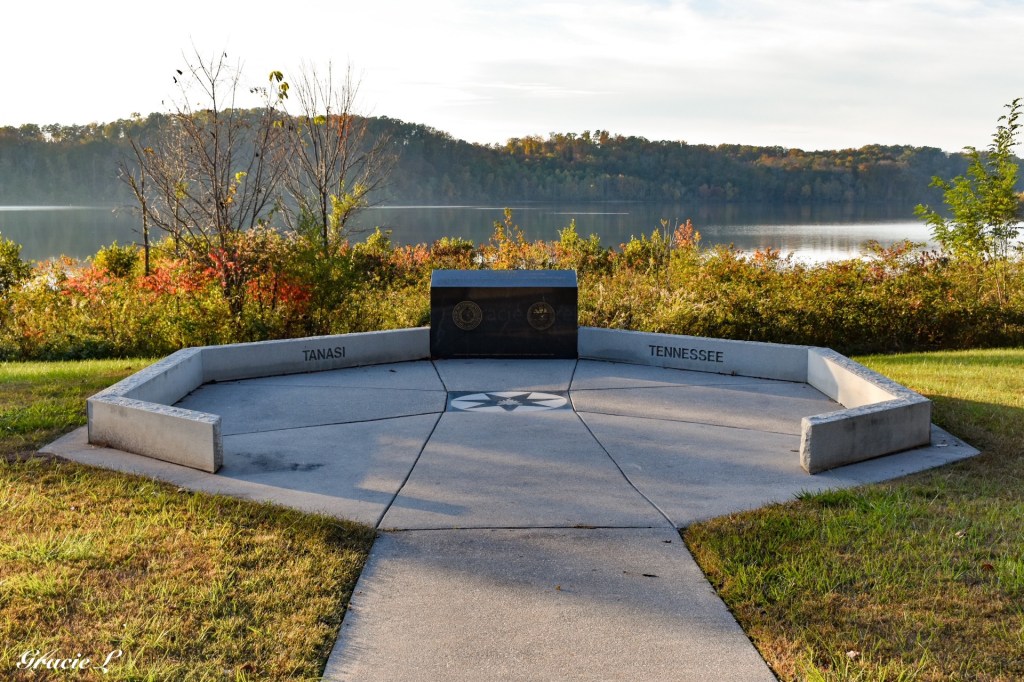
    Hidden underneath the Tellico River in Vonore, Tennessee lies the Cherokee Nation’s first capital city of Tanasi.

    The capital was in effect from 1721 to 1730, 46 years before the Declaration of Independence was signed.

    Tanasi attained political prominence in 1721 when its civil chief was elected the first “Emperor of the Cherokee Nation”. About the same time that this had occurred, the town name was also applied to the river on which it was located.

    During the mid-18th century, Tanasi became overshadowed and absorbed by the town of Chota which was located to the immediate north.

    So how did Tennessee get named from the town of Tanasi?

    The first recorded spelling of Tennessee as it is today occurred on Lt. Henry Timberlake’s map of 1762. In 1796, the name Tennessee was selected among several as most appropriate for the nation’s 16th state.

    The flooding to create the Tellico River in this area caused the town to become underwater. The flooding was caused for the Tellico Reservoir and to complete the construction of the dam on the Little Tennessee River.

    The site of the former town of Tanasi is now underwater and is located about 300 yards west of the Tanasi marker.

    Folks from all around can come to the Tanasi Memorial on the Tellico River to pay tribute to this underwater but never forgotten town!

    If ya’ll are interested in visiting here is the address to the marker

    Follow Hwy 360 to the junction of Hwy 360/Hwy 455 for about 5miles. Then turn left onto Country Road 461 where you will then turn right to the Tanasi Memorial.

  • Chipmunks Can Swim! Here’s How!

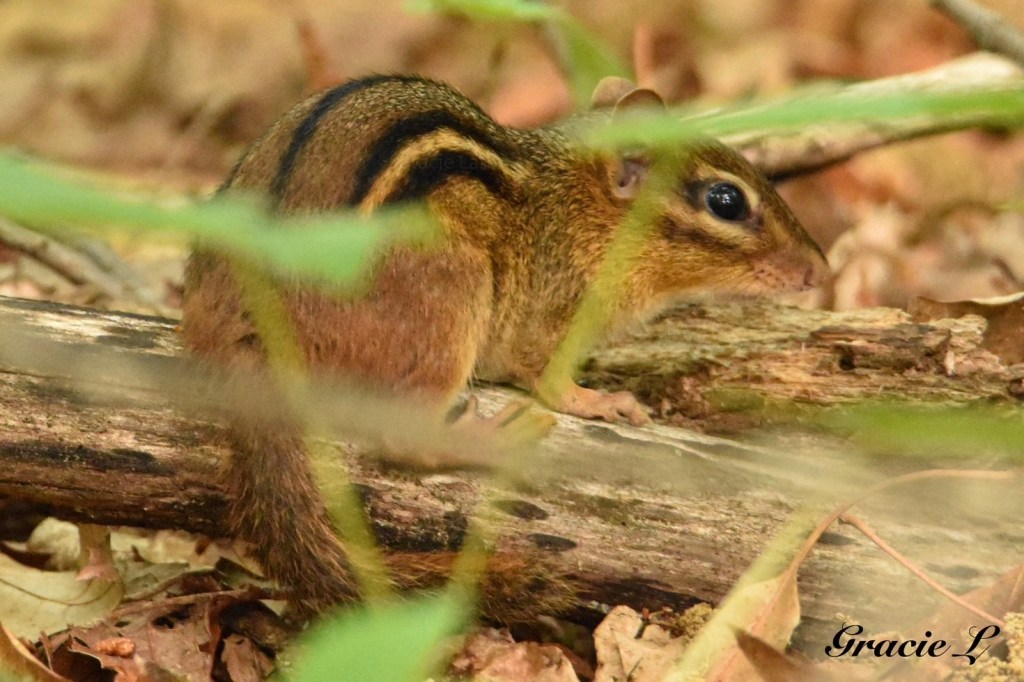
    Did you know one of our little Appalachian residents is a great swimmer?! The animal that I am talking about is the Chipmunk!

    The Chipmunk, one of the tiniest mammals of the Appalachians and the smallest member in the squirrel family that call the mountains home is actually good swimmers. But how do they do it?

    Chipmunks swim by using their feet to doggy paddle across the water while using their tail as a rudder helping them steer their way across the water guiding them whichever direction that they prefer to go. They create very large splashes while paddling across rivers, streams and creeks to get to the other side. However, they don’t travel fast across the water just enough to keep their pace going. Some have even said that once the chipmunk arrives on dry land again, it will shake the excess water off of their body like a dog before heading straight back into the woods.

    However, even though our furry friends are semi-good swimmers it is still extremely important to make sure that they still have a safe way to get out of the water so make sure that your water containing subjects like your swimming pools for instance are chipmunk proof and they have somewhere for them to rest. Chipmunks do this naturally by sitting on the rocks that are in the streams and rivers in the mountains or by sitting on the ones beside the rivers and streams!

  • Joe Pye Weed

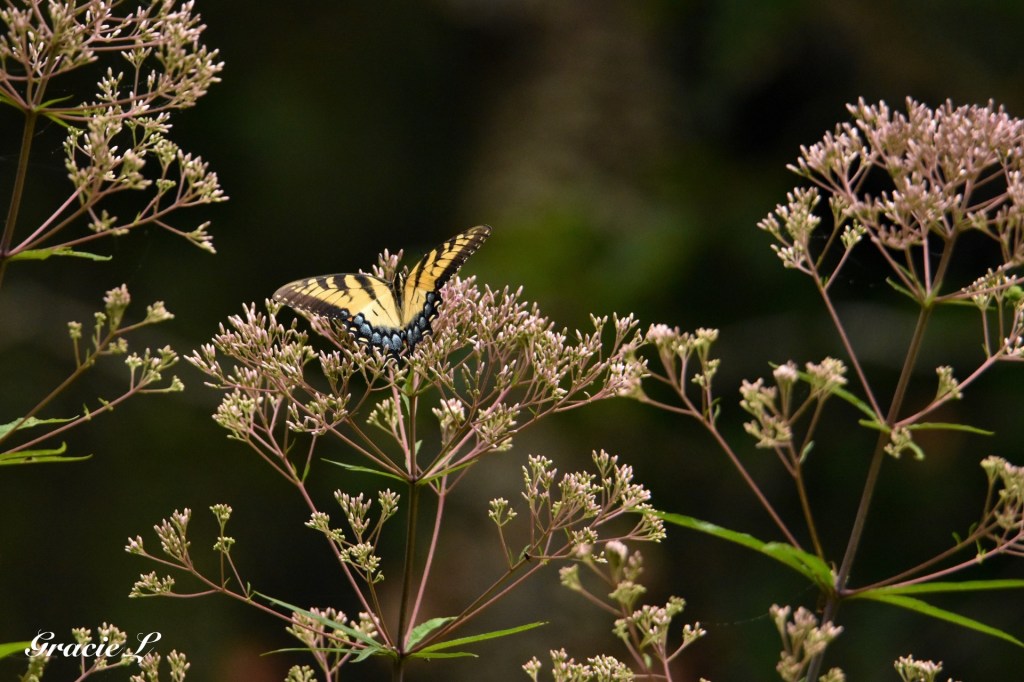
    This is Joe Pye Weed. This Appalachian Wildflower or weed as it’s most commonly called was used for several health conditions by the Cherokee nation.

    Some of which included using Joe Pye Weed roots and flowers as a diuretic to help with urinary and kidney problems. The Cherokees would also steep Joe Pye weed roots and leaves in hot water and would the liquid be taken for inflammation and fevers.

    However, this is very dangerous plant if the medicine uses are not done right.

    The weed’s name is said to have derived from the Native American Medicine Man named Joe Pye who gain fame for helping to cure the typhus fever and other illnesses by using this weed. It is even said that Joe Pye helped to cure an entire colony of early white settlers.

  • What Causes a Wild Turkey’s Feathers to Shimmer?

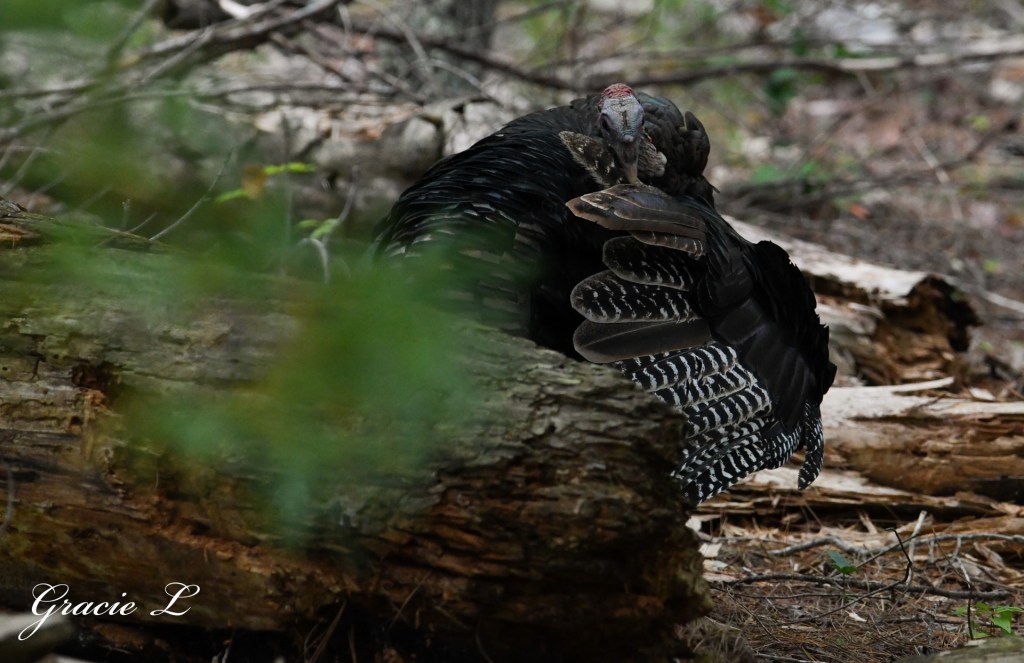
    Wild Turkeys are one of the most beautiful birds of the Appalachian Mountains and one of the most unique! While on your annual trip to the Appalachians you will more than likely come across one of these majestic birds as their range is everywhere at every elevation.

    So, what makes these beautiful birds feathers shimmer in multiple colors? We are fixing to find out but first let’s learn a little bit more about their feathers!

    An adult Wild Turkey is covered with five to six thousand feathers. Their feathers come in eight different shapes and several colors and sizes. Each feather group has a pattern, and these are called “feather tracts”. Feather tracts can include the tail feathers all the way to their wing feathers!

    A Wild Turkey has on average eighteen tail feathers, but that number can be greater or lesser.

    Males use their wing feathers and tail feathers to promote mating. They will flare their tail feathers in a large fan and then walk across the field while expanding their wing feathers and dragging them on the ground. They will also flare their breast and back feathers and will change their head color from blue to red.

    So, what truly causes a turkey’s feathers to shimmer in multiple colors? Let’s find out!

    A Wild Turkey’s feathers while in the sunlight shimmer multiple colors ranging from red, copper, gold, orange, green, purple all the way to bronze.

    However, the head, neck and breastbone are mostly featherless making these amazing birds even more unique!

    The feathers that they have though serve multiple purposes including but not limited to protecting them from the elements, camouflage, flight, to attract a mate and etc.

    From a baby to an adult, a Wild Turkey goes through eight different feather molts.

    Needless to say, they are very colorful birds!

  • Mountains Are Colder Than Valleys But Why?

    The question of how a mountain so close to the sun can be cooler than the valley below has been asked and wondered here in the Appalachian Mountains for some time now but there is an answer to this!

    The air atmosphere is warmed by the radiation from below Earth, and this makes the valley much warmer than that of the mountains. As the air rises in elevation, the air encounters lower pressures and is a much thinner air.

    The further away you get from the Earth’s surface, the thinner the atmosphere gets therefore causing higher elevation to have cooler temperatures versus lower elevation having warmer temperatures.

    If a person stands at the foot of the mountains, you might not realize since the air mass is lighter than compared to other masses for instance if the air was water you would notice. As you get closer to the top of the mountain the air gets more space to roam than below sea level causing the air to turn from warmer to colder. Below sea level though the air is sort of trapped and therefore produces warm air with the trapped energy.

    Although the Sun does still produce heat it is 93 million miles away from Earth and Space is not warm so the higher in altitude that you climb in the atmosphere the cooler the air gets. However, the sun does heat up the Earth’s ground and in return the air makes contact with the ground and then heats the air up, then expands and then later cools.

    Air in our atmosphere is kind of like a basketball, it moves up and down and this creates our weather!

    Cooler higher altitude air sinks down and is compressed as it descends further down and is heated as this occurs. The process is called convection.

  • This Recipe Prevents Rabbits from Eating Your Flowers!

    Are you all having the same issue as me, you love your rabbits but at the same time you want to keep your flowers from being a midnight snack. For instance, your sunflowers?

    Don’t worry because this hot pepper spray has got ya’ll covered!

    Cayenne Pepper is a natural deterrent and will keep many of our furry friends safely out of our flower beds including deer, squirrels and you guessed it rabbits!

    So how does it work? You simply add about 2 quarts of water and a tablespoon of Cayenne pepper into a pot. Boil the mixture for about 20 minutes. After boiling the mixture take it off the stove and let it cool and then strain it through a cheesecloth. After cooling and straining the mixture, place it into a spray bottle and spray the surfaces and plants that you want to protect from being a snack!

    Just don’t spray any plants that you’re going to eat or else you will have a heated dinner with the folks!

    Spray this mixture every day on your plants for two weeks to help keep the critters away. Don’t spray while your plants are in direct sunlight though or you will scorch them.

    Cayenne Pepper is safe to use on your plants and will not hurt them making this a great deterrent but if you have extra plants and don’t mind sharing, it’s always great to share with our furry friends!

    If you have any other suggestions though on how to keep my sunflowers safe from becoming a midnight snack, please let me know in the comments!

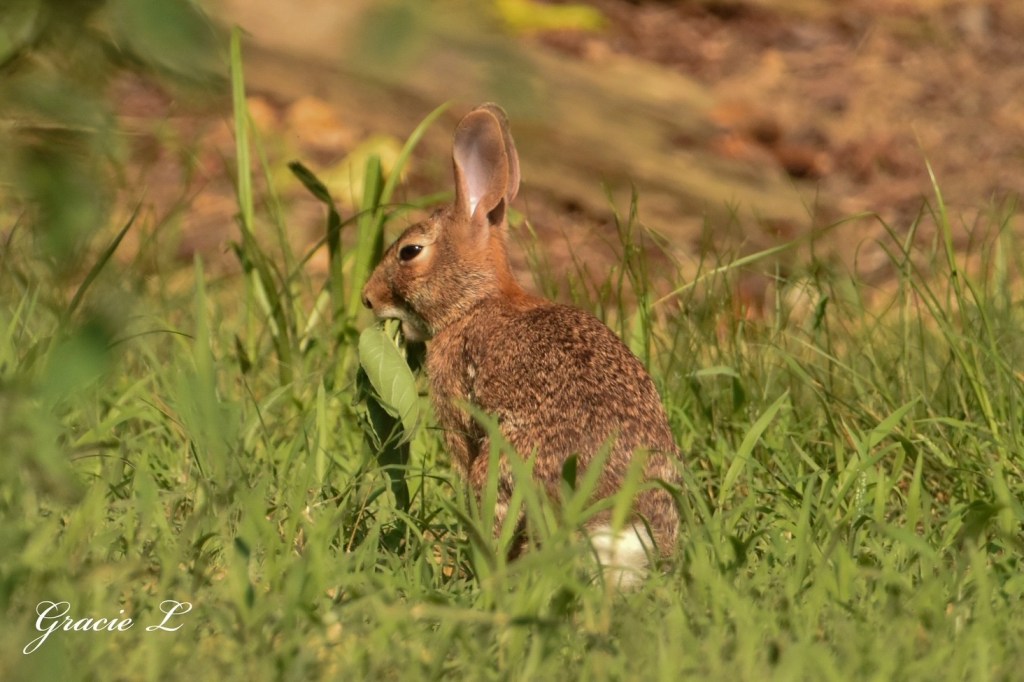
  • Remember To Watch Out for Rabbit Nests in Your Yard This Spring While Mowing the Lawn!

    With Spring just around the corner, the dormant grass is beginning to come back alive and with that being said lawn mowing season is just around the corner and so is Rabbit nesting season!

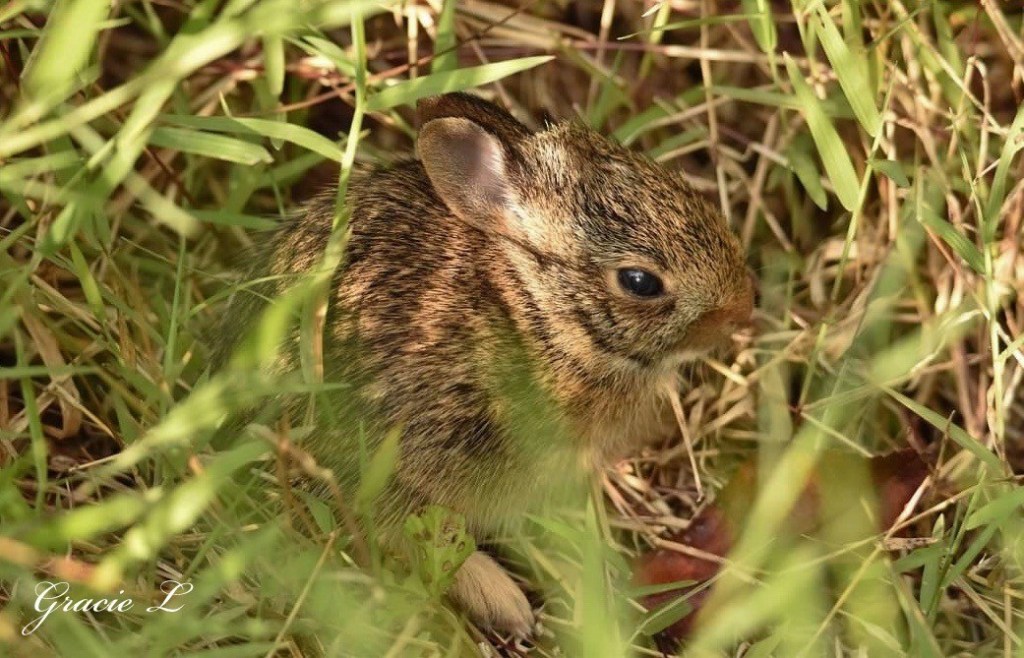
    Rabbits build a shallow nest in the ground and use fur to cover the nest to prevent predators from seeing what’s inside but that’s one of the reasons how they can get hit as well so it’s always a good idea to be on the lookout for a section that looks like dead grass or dead spots while riding on your lawnmower.

    Inside the nest contains baby rabbits called “kits”. A female rabbit “doe” can have 3 to 8 kits per each litter she has, and she can have around 5 litters each breeding season! Breeding season begins in mid- March and ends in early September. The gestation period is around 30 days for each litter.

    The kits are born with their eyes closed and dependent on their mother, but they are fast learners and growers as they can leave the nest at around 3 weeks of age, and they are about the size of a chipmunk.

    A doe nurses her babies once every 12 to 24 hours until they reach the age of independency.

    If you do spot a rabbit’s nest in your yard, it’s always best to leave the nest where it’s at and to mow ten feet away from the nest.

    Rabbits have also been known to make nests in flower beds, leaf litter piles and underbrush.