Wild Turkeys are one of the most beautiful birds of the Appalachian Mountains and one of the most unique! While on your annual trip to the Appalachians you will more than likely come across one of these majestic birds as their range is everywhere at every elevation.
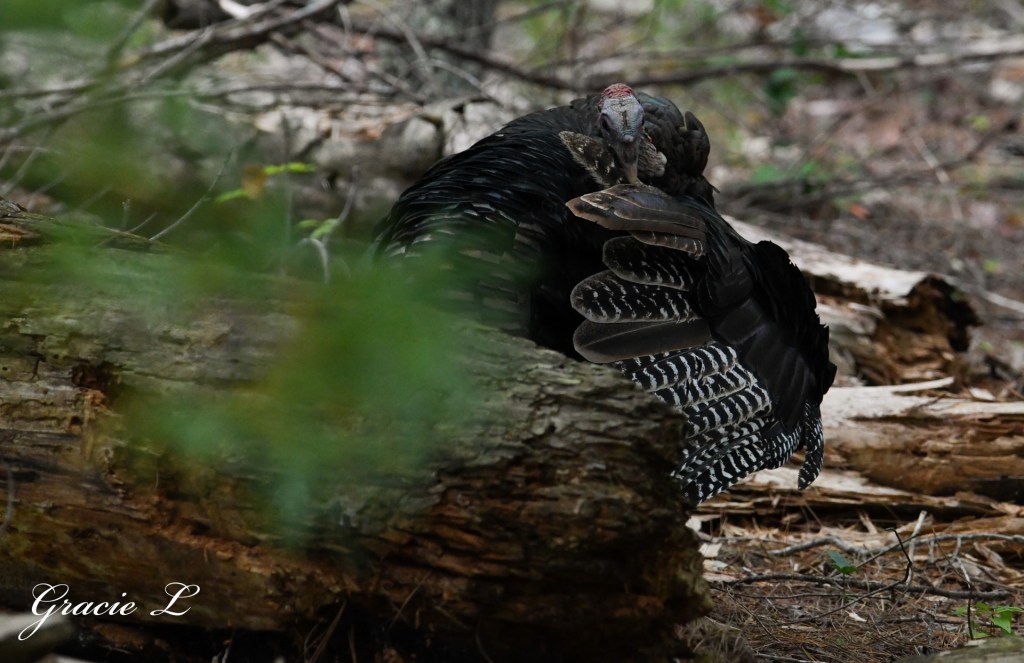
So, what makes these beautiful birds feathers shimmer in multiple colors? We are fixing to find out but first let’s learn a little bit more about their feathers!
An adult Wild Turkey is covered with five to six thousand feathers. Their feathers come in eight different shapes and several colors and sizes. Each feather group has a pattern, and these are called “feather tracts”. Feather tracts can include the tail feathers all the way to their wing feathers!
A Wild Turkey has on average eighteen tail feathers, but that number can be greater or lesser.
Males use their wing feathers and tail feathers to promote mating. They will flare their tail feathers in a large fan and then walk across the field while expanding their wing feathers and dragging them on the ground. They will also flare their breast and back feathers and will change their head color from blue to red.
So, what truly causes a turkey’s feathers to shimmer in multiple colors? Let’s find out!
A Wild Turkey’s feathers while in the sunlight shimmer multiple colors ranging from red, copper, gold, orange, green, purple all the way to bronze.
However, the head, neck and breastbone are mostly featherless making these amazing birds even more unique!
The feathers that they have though serve multiple purposes including but not limited to protecting them from the elements, camouflage, flight, to attract a mate and etc.
From a baby to an adult, a Wild Turkey goes through eight different feather molts.
Needless to say, they are very colorful birds!
 Gracie Latrelle