Tag: military

  • One Of the Oldest Gristmills in Georgia is in North Georgia

    Located on West Chickamauga Creek lies a very important part of Georgia’s history!

    The mill was built by a man named James Gordon who came from Gwinnett County, Georgia (Atlanta) in 1836.
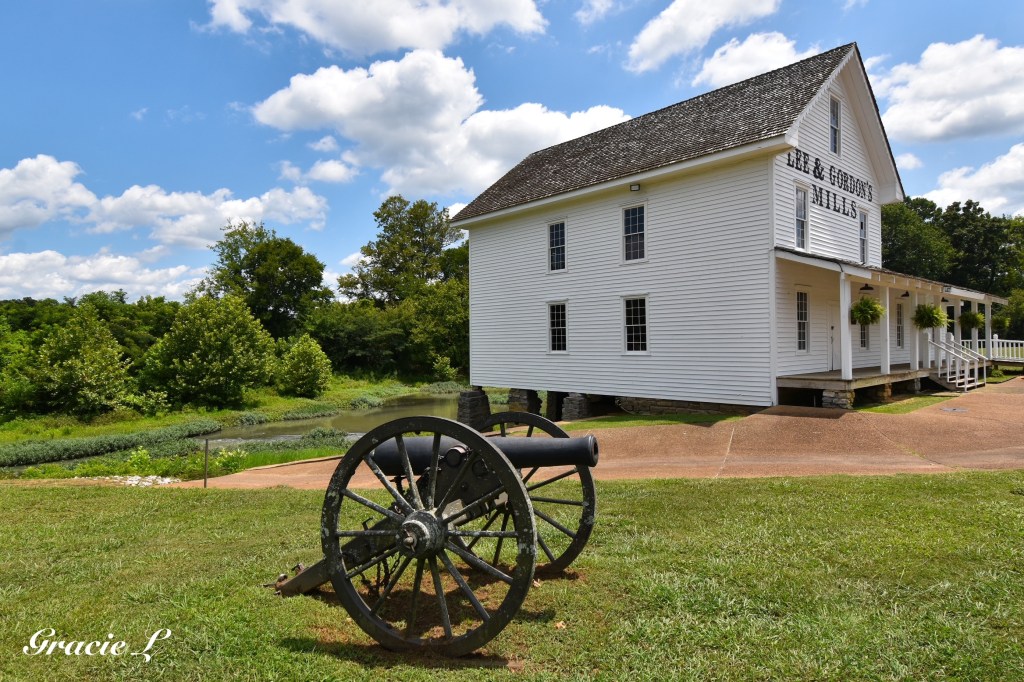
    The mill served the community as one of the first general stores in the area. A blacksmith shop was also located nearby.

    The stagecoach and mail passed through twice a week.

    During the Civil War or “War Between the States” if you will, Confederate General Braxton Bragg and the Confederate Army of Tennessee used the mill as their headquarters from September 9 through the 10th of 1863.

    On September 10, 1863, General Bragg moved his headquarters out of the mill to nearby LaFayette Georgia and after doing so the next day Union troops occupied the mill and surrounding areas.

    On September 13 through the 18th of 1863, the Battle of Chickamauga drew troops to the North and the mill was once again used as a headquarters for the Confederate army but not for General Bragg and his army this time but rather General Joseph “Fighting Joe” Wheeler and his cavalry corps.

    The mill was later captured back by the Union Army in the winter of 1863. The Union used the second story of the mill as a Masonic Lodge.

    Sadly in 1867, the mill that had been around over 30 years and survived America’s deadliest wars burnt.

    James Lee, James Gordon’s partner rebuilt the mill on the same site that the first one had burnt and that is the mill that still stands today.

    For years the mill stood empty but yet full of history and in 1993 Mr. Frank Pierce purchased the mill and restored it to operating condition and rebuilt the dam.

    The mill is open from Tuesday through Saturday from 9am to 5pm. Admission is free and you can purchase fresh ground cornmeal on the mill’s site.

    This place is a true Georgia historic site loaded with so much history!
  • Georgia’s Sherman Neckties: A Burning Civil War Tactic!

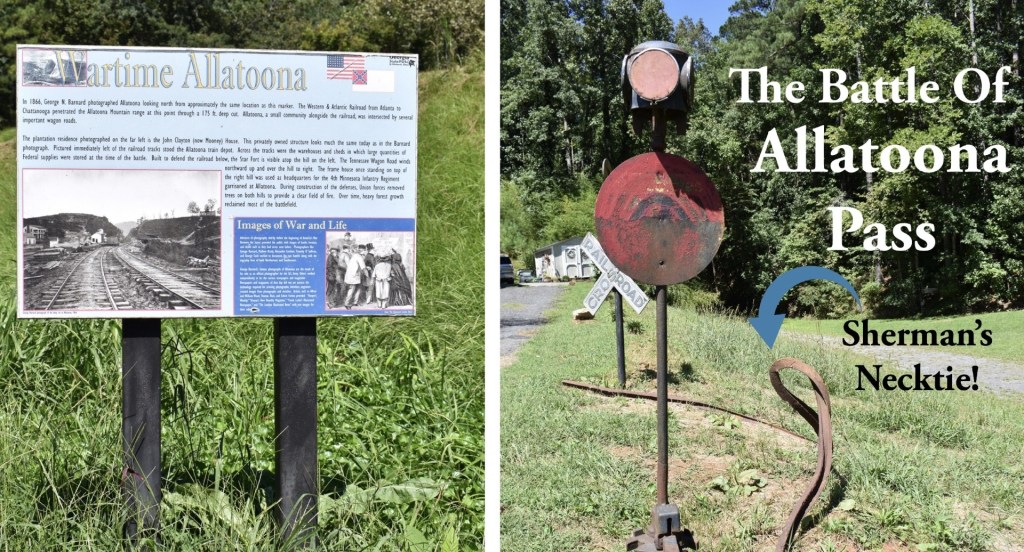
    Sherman’s Necktie was a way of railway-destruction that was used by General William Tecumseh Sherman during the Civil War.

    General Sherman was responsible for the “March To Sea” all the way to Savannah and the burning of Atlanta, Georgia.

    To this day, you can still see Sherman Railroad Neckties in the state of Georgia.

    The neckties were formed when Union Troops heated railway rails until they were able to be bent.

    After the Union Troops heated the rails, they would take the rail and wrap it around a tree and bend it around into a necktie or loop if you will.

    Surprising enough though, General Sherman did order destruction during the “Atlanta Campaign”.

    However he did not order the destruction of the railroad ties. This is what he said.

    “In case of the sounds of serious battle Major-General Mcpherson will close in on General Schofield but otherwise will keep every man of his command at work in destroying the railroad by tearing up track, burning the ties and iron, and twisting the bars when hot. Officers should be instructed that bars simply bent may be used again, but when red hot they are twisted out of line they cannot be used again. Pile the ties into shape for a bonfire, put the rails across and when red hot in the middle, let a man at each end twist the bar so that its surface becomes spiral.”

    Wm. T Sherman, Special Field Orders, July 18, 1864

    Three days after this letter from Sherman was sent only 1 railroad remained intact into Atlanta but there was something that the Union forgot.

    The Confederates gained knowledge of what the Union was doing and returned the favor by using the same tactics against Sherman’s supply line, the Western and Atlantic Railroad from Chattanooga, Tennessee to Atlanta, Georgia in the early days of the Franklin-Nashville Campaign in late 1864.

    The Confederate recalled their twisted ties as “Old Mrs. Lincoln’s Hair Pins.”

    So, the next time that you come across a twisted railroad tie, it could be one of Sherman’s Neckties or one of “Old Mrs. Lincoln’s Hair Pins.”