Tag: nature

  • What Causes a Wild Turkey’s Feathers to Shimmer?

    Wild Turkeys are one of the most beautiful birds of the Appalachian Mountains and one of the most unique! While on your annual trip to the Appalachians you will more than likely come across one of these majestic birds as their range is everywhere at every elevation.
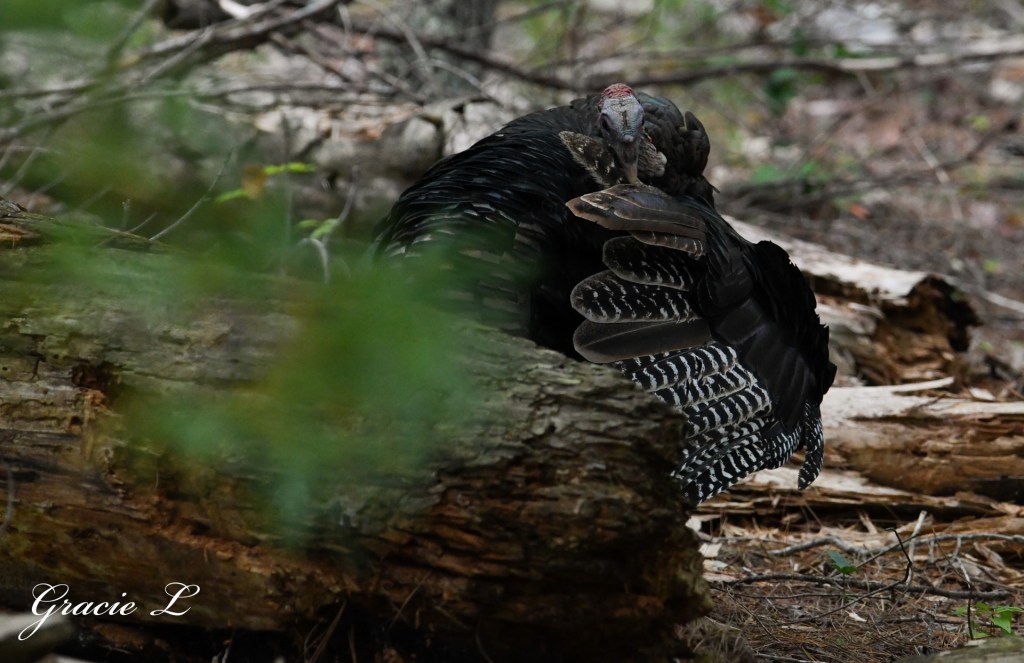
    So, what makes these beautiful birds feathers shimmer in multiple colors? We are fixing to find out but first let’s learn a little bit more about their feathers!

    An adult Wild Turkey is covered with five to six thousand feathers. Their feathers come in eight different shapes and several colors and sizes. Each feather group has a pattern, and these are called “feather tracts”. Feather tracts can include the tail feathers all the way to their wing feathers!

    A Wild Turkey has on average eighteen tail feathers, but that number can be greater or lesser.

    Males use their wing feathers and tail feathers to promote mating. They will flare their tail feathers in a large fan and then walk across the field while expanding their wing feathers and dragging them on the ground. They will also flare their breast and back feathers and will change their head color from blue to red.

    So, what truly causes a turkey’s feathers to shimmer in multiple colors? Let’s find out!

    A Wild Turkey’s feathers while in the sunlight shimmer multiple colors ranging from red, copper, gold, orange, green, purple all the way to bronze.

    However, the head, neck and breastbone are mostly featherless making these amazing birds even more unique!

    The feathers that they have though serve multiple purposes including but not limited to protecting them from the elements, camouflage, flight, to attract a mate and etc.

    From a baby to an adult, a Wild Turkey goes through eight different feather molts.

    Needless to say, they are very colorful birds!
  • Bear Safety Tips!

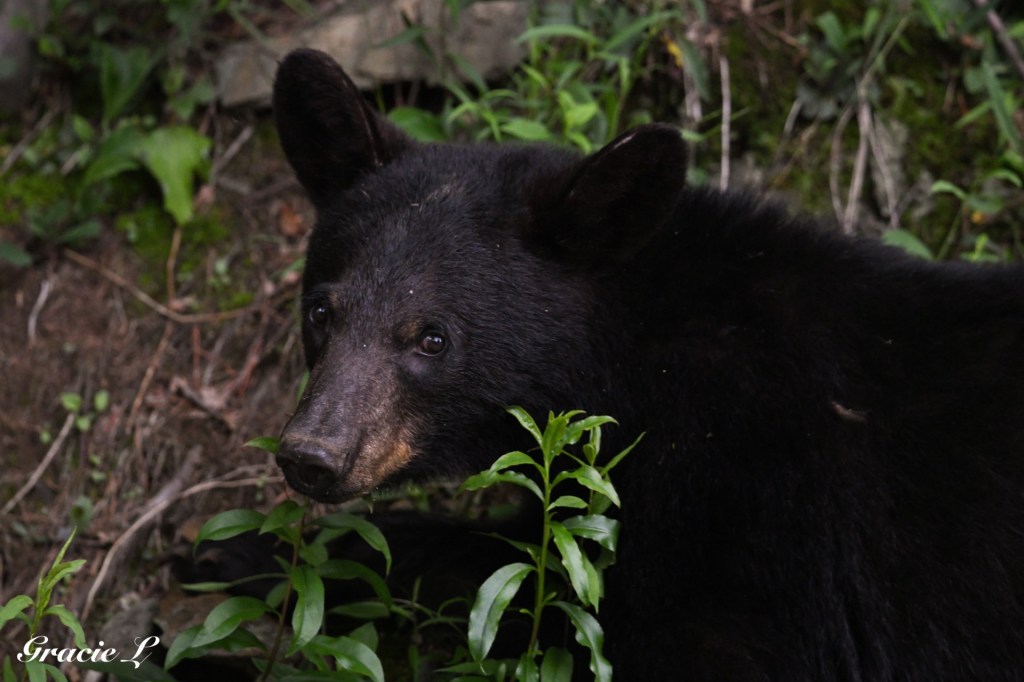
    Black bears, a fierce creature but yet gentle until provoked! So how do we keep these beautiful creatures and our family safe without harming you or the bear while camping? Here are a few ways!

    1. Do Not Feed The Bear!

    Sure, Black bears look cute and cuddly from a distance but don’t let that get to you! Bears are extremely territorial especially with food as it is their natural instincts to compete with other animals for food in the wild.

    2. Leave the bear be!

    Bears are not meant for up-close and personal encounters as this might result in your last encounter! If you find yourself accidently too close, stop, back away from the bear and do not turn your eyes away on the bear as these are wild animals and are extremely unpredictable! If the bear still follows you, make loud noise and make yourself larger than the bear by raising your arms above your head!

    3. Bring Bear Spray!

    This is a last result option but if the bear begins to attack you, spray the bear and the bear more than likely will leave. It’s completely safe for the bear and only requires discomfort for a few minutes.

    4. Lock Your Food Inside Your Car or Camper!

    Food locked away is a bear’s best friend as a fed bear is truly a dead bear! Bears continue to come back to the campground of which they were fed and when you don’t feed the bear, the bear becomes severely angered and can result in an attack!

    5. Don’t Camp in Any Campsite with Leftover Food Left in It!

    It always a good rule of thumb as you don’t necessarily have to be the one who left the food behind but those before who did probably attracted in some kind of wildlife with it which would include bears! So, always be alert when pulling into a new campsite with some leftovers as it might come with a furry guest as well!

    I hope these tips were helpful! Happy Camping Everyone!

  • The Time to Start Planting Your Garden!

    Me and my family plant our garden by the signs of the moon including the breast, head, neck, arms, legs, knees, heart, belly and etc.

    Each plant does better in different signs. For instance, tomatoes do good when planted when the moon is in Cancer and in the breast, Scorpio in the Secrets and Pieces in the Feet.

    The stages of the moon are extremely important in the plant’s growth and during each month the moon will pass through one of the twelve constellations that make up the signs of the Zodiac.

    One of the best times to plant is during the new moon but just to make sure check your calendar to see what the signs are of the day that you’re planting.

    The first quarter of the moon is a great time to plant annuals who are producing their crop above ground and is normally leafy including broccoli, cabbage, Brussel sprouts, asparagus, celery, corn, cauliflower, lettuce, leeks, oats, parsley, onions and spinach.

    The second quarter of the moon is also a great time to plant annuals who are producing their crop above ground but are of a vine variety that produces their seed inside the crop like beans, melons, eggplants, peas, peppers, pumpkins, squash and tomatoes.

    The third quarter of the moon is great to plant bulbs, roots and perennials. Meaning that it is a great time to plant shrubs, trees, berry baring fruits, artichokes, beets, carrots, onions, parsnips, potatoes, radishes, rhubarb, rutabagas, strawberries, winter wheat, turnips and grape vines.

    Last but not least is the fourth quarter of the moon and during this time it is just best to cultivate your garden, turn the soil, pull weeds and prevent pests as when the moon is in the barren like this the plants will not grow well and these signs include Aries, Leo, Virgo, Gemini, Aquarius and Sagittarius.

    Apple and Pear Tip! Pick your apples and pears in the old of the moon and the bruised spots will dry up and if you picked them in the new moon the spots will rot. Harvest all crops when the moon is growing old as they will keep longer and better.

    I’m just curious to know do you all plant by the signs of the moon?

  • How A Woodpecker Builds a Nest!

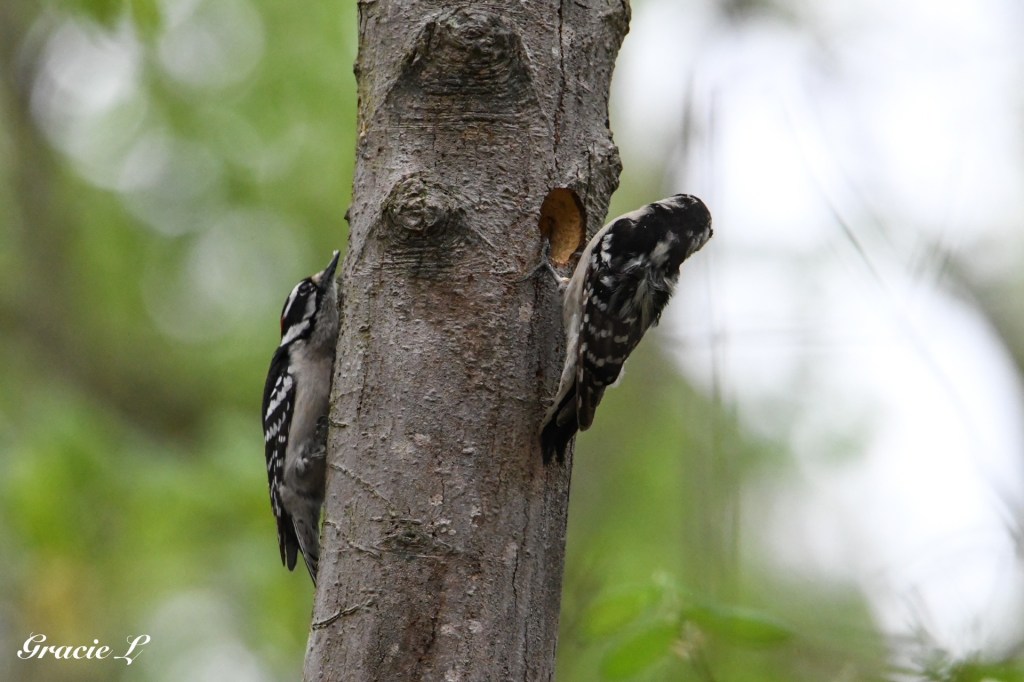
    Have you ever seen the cutest and tiniest black and white woodpecker? If you have, you have more than likely have just spotted a Downy Woodpecker.

    Downy Woodpeckers are a common sight at my feeders and one couple has just recently decided to build a nest in a dead tree just a few feet from the feeders and it got me to thinking how do they build such an extravagant home? Well, we are about to find out!

    Downy Woodpeckers first begin designing their new home by choosing a wooden tree stub no more than 7 inches in diameter and that leans away to provide shelter and provides a place where they can put the entrance on the bottom.

    After choosing their new “treehouse”, the couple will then begin chipping away at the surface of the tree until they form a circular hole at the top of the tree and a circular hole entrance at the bottom. This process takes the couple one to three weeks to complete both taking turns.

    Entrance holes are about 1 to 1 1/2 inches across and the cavities will be 6 to 12 inches deep, and the cavity will widen as it goes deeper inside the nest to provide room for the eggs. The cavity will be lined with wood chips to provide cushion for the eggs.

    After completing the nest, the female will lay 3 to 8 eggs and both male and female will incubate the eggs for about 12 days.

    After hatching, the babies are born naked with pink skin and with their eyes closed. They are also born with a sharp egg tooth which helps the baby to hatch out of their eggshell.

    Both parents will bring the babies a mouth full of insects around the clock to feed the nestlings and the babies will remain with them until they are 20 to 25 days old.

  • Owls Turn Their Heads All the Way Around Without Damaging Them! Here’s How!

    Owl species including the Barred Owl do not have eyes in the back of their head so to see what’s going on around them they have to turn their head over 270 degrees in each direction and by doing this natural trick they can turn all the way around! When owls like the Barred Owl look to the left, they can turn their head all the way to the right and when they look to the right, they can rotate all the way to the left but how do they do this without damaging their neck and head?

    An owl’s neck bones or vertebrae contains holes that are much larger than they are in other birds and us humans. In humans, the holes are about the size of an artery and in owls they are ten times the size versus humans. This causes the holes to hold air sacks which helps to cushion the owl’s neck when it turns its head, and this prevents damage to their neck. If us humans did the same thing, we would more than likely have a stroke.

    So why do owls need this incredible feature? Owls have spherical shaped eyes, and their eyes are elongated tubes, and their eyes are attached in their eye sockets by bone. The tubular shape of the owl’s eyes helps the owl to have amazing binocular vision which helps in spotting prey. However, owls cannot turn or roll its eyes and instead can only look straight forward but by them being able to turn their head around allows them to get a good look around their area.

    While human arteries tend to constrict when we turn our heads very far around and with owls the arteries continued to expand which allows the blood to continue to flow and eventually pool into tiny reservoirs and these reservoirs helped minimize the restriction of blood flow and to maintain eye and brain function while the owl is turning its head.

    With all this being said the owls are truly an incredible masterpiece of nature!

  • The Road into Cade Cove is Not the Original Road!

    With millions of folks around the nation and world for that matter coming to visit The Great Smoky Mountains National Park each year, it’s safe to say that the roads are used to their maximum now days, but did you know that the road into Cades Cove is not the original route that the settlers used?

    Back when Cades Cove was a thriving local family community, settlers used five different roads (which we will get to in a moment) to exit and enter the Cove. None of which is the road that we all take to enter the Cove by Little River from Townsend, Tennessee and Gatlinburg, Tennessee.

    The settlers mostly used these five roads to commute back and forth to gather food, supplies and other needs in town. The roads include Rich Mountain Road which can still be drove on by visitors today but just in select seasons of the year though! It is located on right side of the loop straight across from The Missionary Baptist Church. This road was used most commonly by those who lived in the center of the Cove. Rich Mountain takes you through the heart of the Smokies into the mountains which we all call home and takes you to Tuckaleechee Cove just on the outskirts of Townsend. It is graveled and pretty tough terrain so I would recommend a high off the ground vehicle.

    Another common road that was used was Crib Gap Road. This road is not a drivable road but nevertheless still a true part of Cades Cove’s history. This road took the settlers east to the Anderson Turnpike which then went to Tuckaleechee Cove just like Rich Mountain Road. This road is now a 3.9 mile out and back trail and is considered moderately challenging.

    Cooper Road was another used road by the settlers. It was used as a direct route to Maryville straight from the Cove. Cooper Road is now a 11.1 mile out and back hiking trail that can be accessed at the upper end of Abrams Creek Campground. This is considered a moderately challenging trail.

    Rabbit Creek Road was located at the Abrams Creek Parking Area and headed back south to Happy Valley which is located just to the east of the Foothills Parkway West Overlook #14 and just west of the Abrams Creek Campground.

    Last but certainly not least is Parsons Branch Road which is located just a few miles from the Cades Cove Welcome Center and about 1/4 mile from Henry Whitehead’s Cabin. This road is accessible by car but is graveled and pretty rough terrain so I would recommend a high off the ground vehicle. This road allowed settlers to access to Parsons Turnpike in the south and now days provides visitors access to U.S. Route 129 or what is most commonly known as “The Dragon”.

  • Look Out for These Beautiful Wildflowers This Spring!

    With Spring only less than 5 weeks away, the Appalachian Forest floor is fixing to be covered with the most beautiful wildflowers and blooms.

    Wildflowers will start their blooming season in mid-March to early April. The colors will range from blues to yellows all the way to pinks and purples. Nature’s colors and shapes are truly endless when it comes to wildflowers!

    Some of your most common flowers you will spot in the mountains will include Bloodroot, Dwarf Violet Iris, Bird’s Foot Violet, Confederate Violets, Sweet White Violets, Common Blue Violets, Wood Violets, Halberd-Leaved Violets, Wood Anemone, Canadian Wood Betony, Toadshade Trillium, Catesby’s Trillium, Sweet White Trillium, Yellow Trillium, Rue Anemone, Purple Phacelia, Wild Geraniums, Orange Jewelweed (Spotted Touch-Me-Not), Red Cardinal Flowers and Blue Cardinal Flowers.

    Bloodroot one of the flowers I just mentioned before is an herb native to the Appalachians. It has many amazing factors to health including helping inflammation, coughing, growth of new blood vessels, infections and for cancer treatment as well. Native Americans used Bloodroot as a dye, love charm, pain relief, fever relief, a medicine, gangrene and for wound infections.

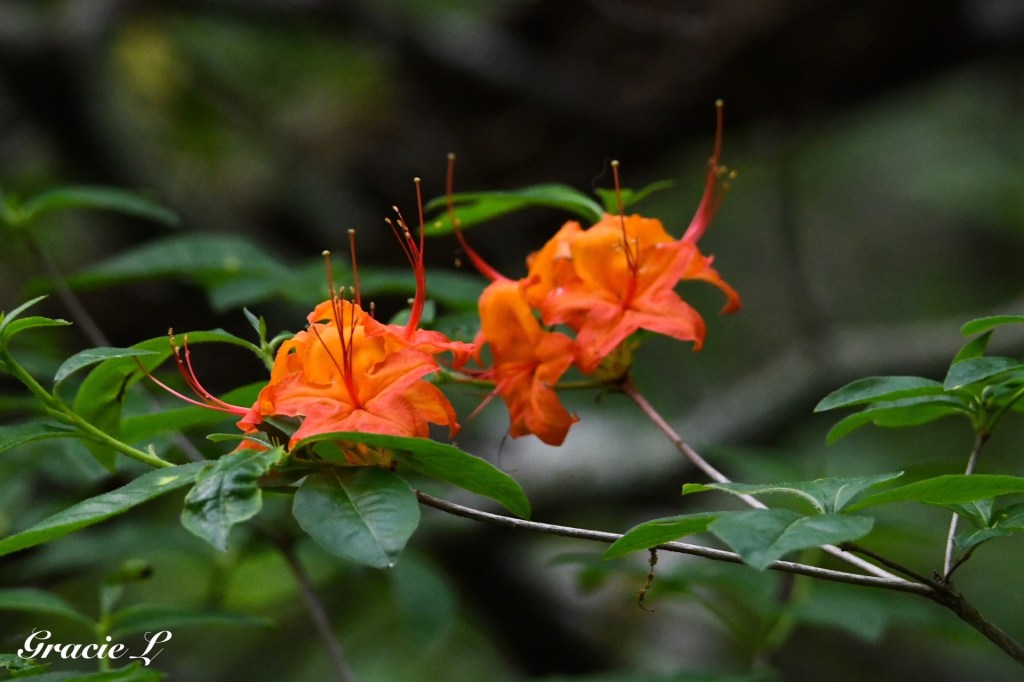
    Each and every wildflower has a special meaning to being here but not all flowers are safe to consume or eat or to even touch! “Cow Itch” as us Southerners call it has some of the most beautiful orange wildflowers that you have ever seen but by touching this flower you will be covered in an itchy rash for one to two weeks.

    With all of this being said it’s always a good idea to have a flower identification book with you or just don’t touch the flower until you have identified it.

    However, when in Federal or State areas like State Parks and National Parks it is always a good idea to never pick any flower good or bad due to it being a federal offense that can result in a fine. Many animals like the Honeybee depend on these flowers to collect nectar to produce honey for their hive.

  • The Historic Wright Hotel in Chatsworth, Georgia

    Located on East Market Street in the center of this beautiful small Appalachian town of Chatsworth, the historic Wright Hotel has seen more history than ever can be imagined.

    The Wright Hotel was built in 1909 by Thomas Monroe Wright, a farmer living in the southern part of the county to provide a home for his family and to provide a spa for visitors coming to Chatsworth in the Summer months to drink the mineral waters.

    Mr. Wright was the builder, architect and overseer of the hotel. With the help of his cousin, Thomas Banks from Clevland, Tennessee, his wife Laura Holbrook and their children Jesse, Obb, Essie, Kate, Jeannie May and J.L, Mr. Wright constructed this 3-story hotel and his family’s home.

    Another child, Glenn was actually born in the hotel.

    Mr. Wright rented the Chatsworth brick plant to construct the soft rose bricks to build the hotel. All the heart pine lumber that was needed for the hotel was harvested from the Wright Farm in Prune, Georgia on Holly Creek and was aged for a year. The floors are made tongue and groove while the walls are made of wooden lattice and plaster.

    Mr. Wright and his cousin Mr. Banks wanted the hotel to have a sturdy foundation so the two decided to place the hotel on a ten-foot foundation which mostly sits underground.

    After the hotel was built and opened in 1909, guests from all around came for visits including, Hoke Smith former Governor of Georgia, Congressman Gordon Lee and J. Frazier Glenn who helped build talc mines into a multi-million-dollar industry.

    On some occasions the Wright Hotel opens for visitors to tour the 22-room hotel including the rooms that the guests stayed in, the dining room, the kitchen, laundry room, the nursing room which displays some of Mr. Wright’s daughter Kate’s paraphernalia while working as a nurse, and even the living room.

    The home also has on display many historic artifacts including several Native American artifacts from which Kate and her husband collected during their years of working with Southwest Indians. They also have on display the original program to the movie Gone With The Wind and a sword from World War l.

    No matter if you are a history lover or just love to learn about your heritage, the Wright Hotel truly has something for everyone!

  • Georgia’s Most Dangerous Insects: Easy Identification Guide!

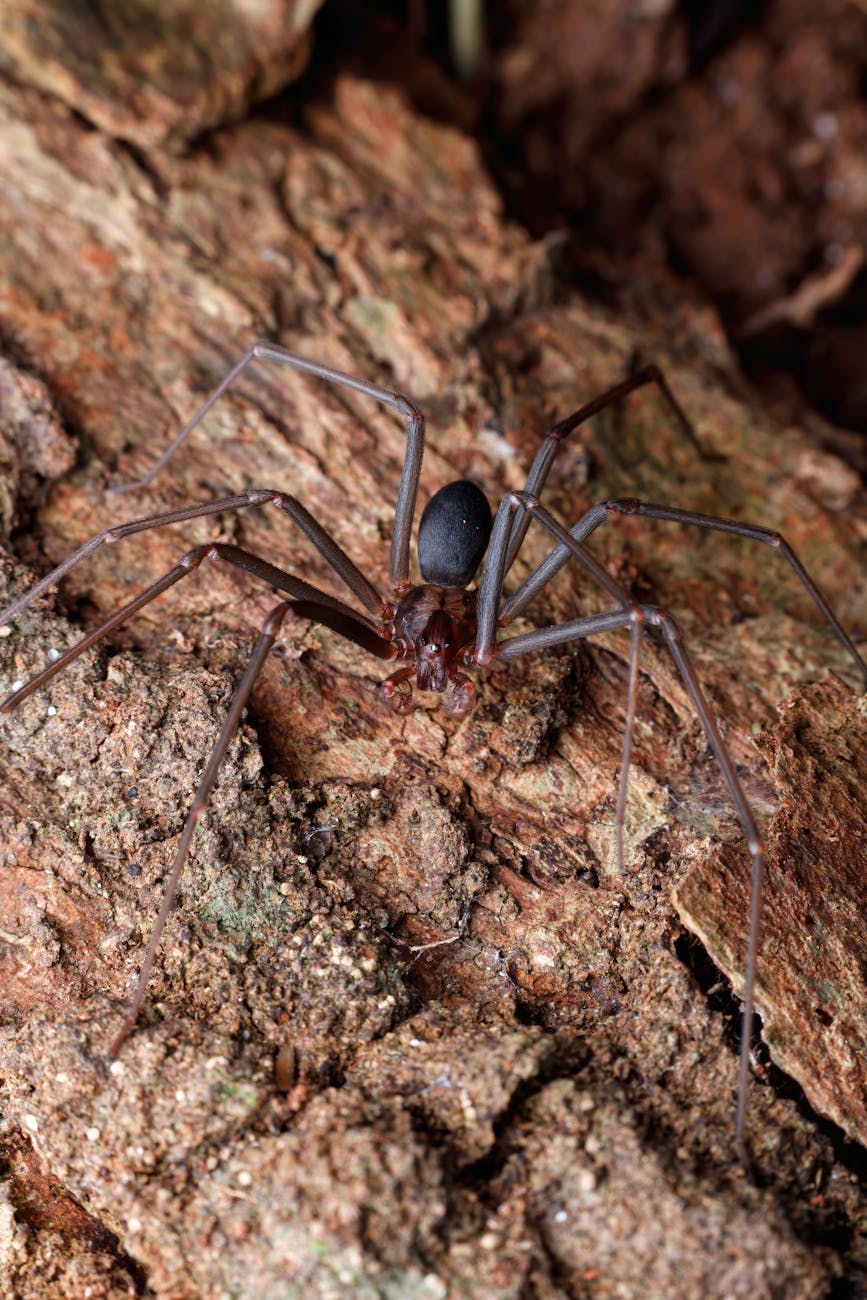
    Brown Recluse Spider

    Photo by cassius cardoso on Pexels.com

    The Brown Recluse Spider bite will result in an extremely painful open wound.

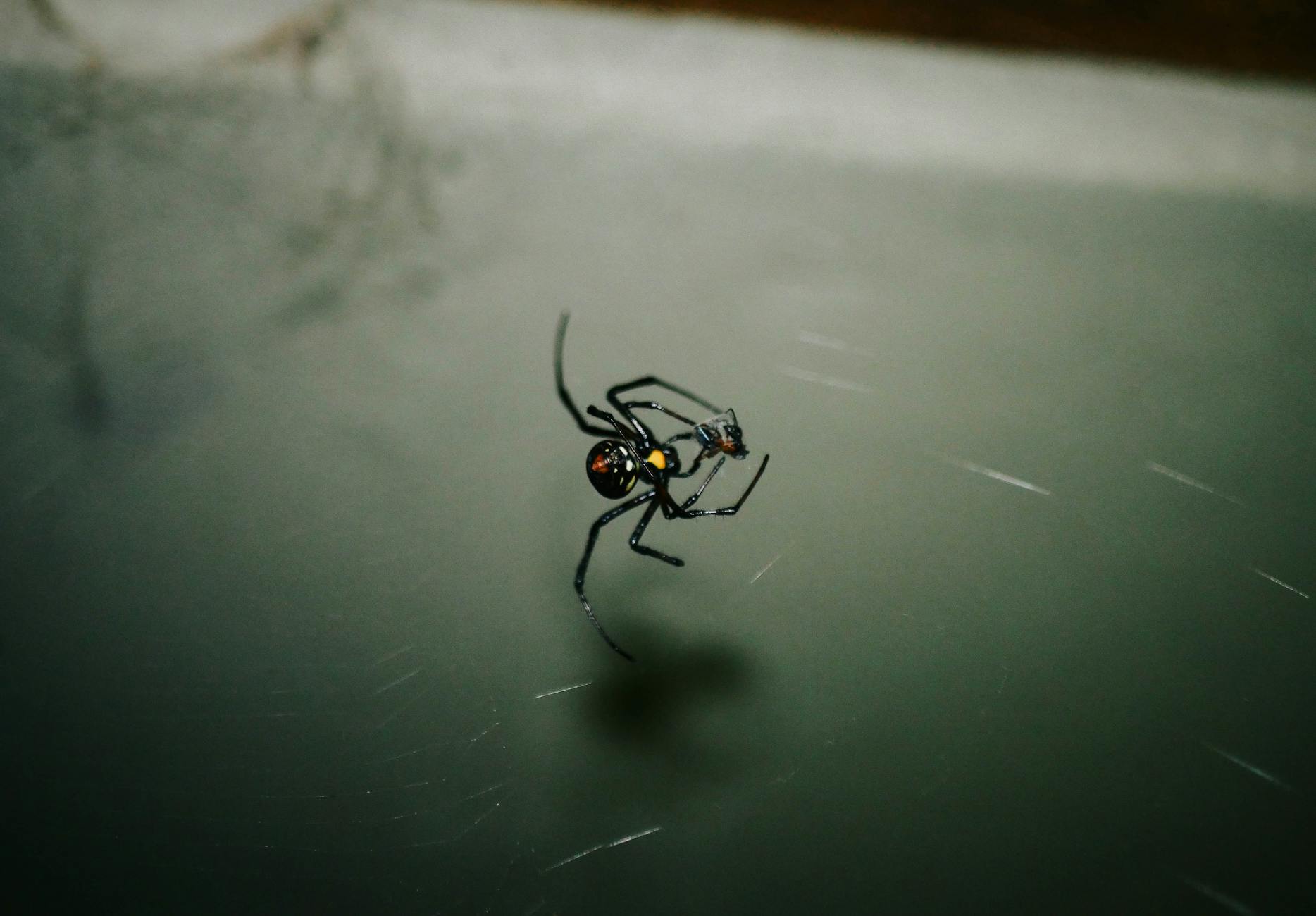
    Black Widow Spider

    Photo by Bruno Guerra on Pexels.com

    The Black Widow is considered to be the most deadiest insect and spider inside the state of Georgia. If you are bitten seek help immediately. Their venom attacks the nervous system resulting in muscle cramps and severe pain.

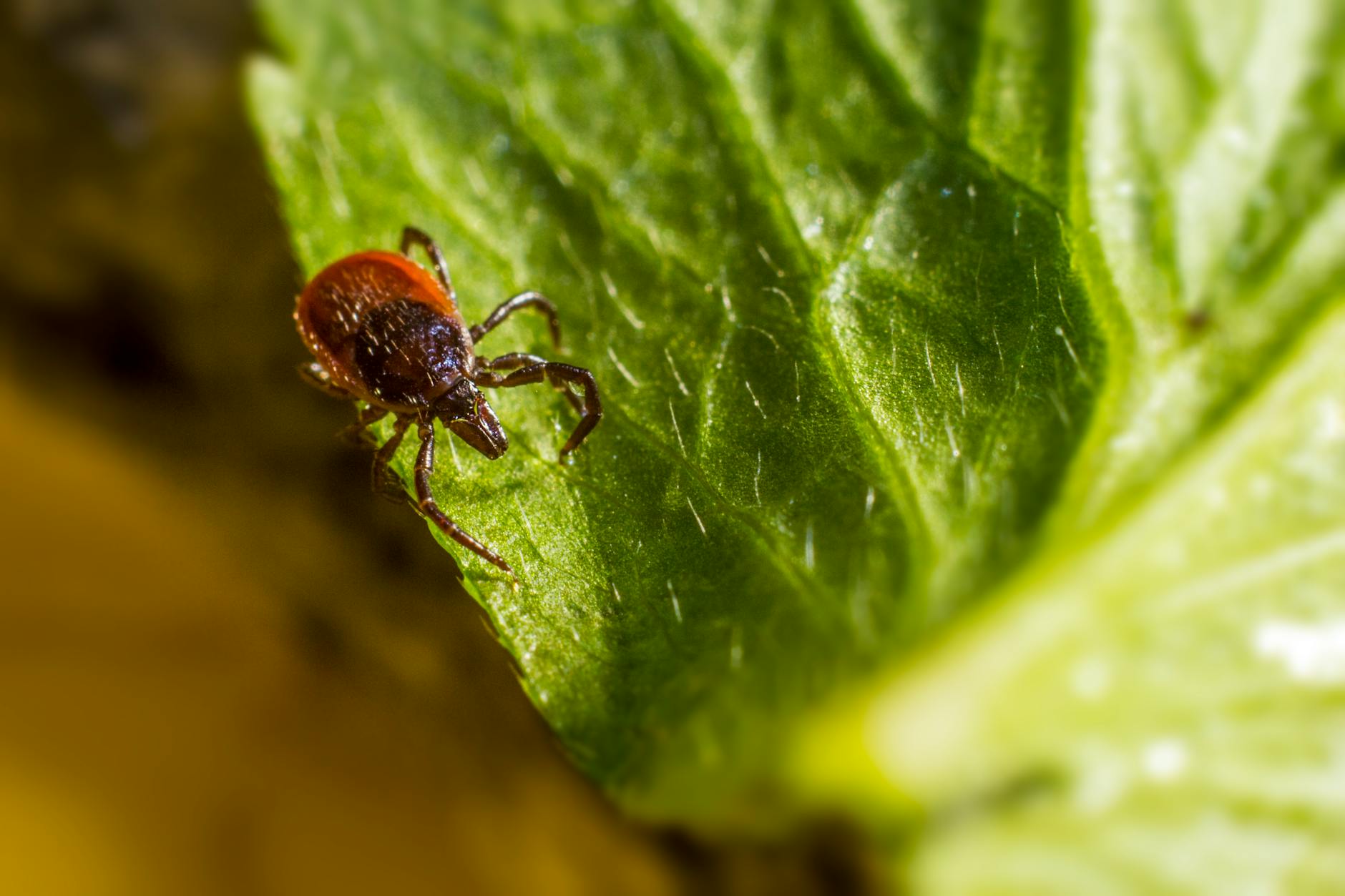
    Ticks

    Photo by Erik Karits on Pexels.com

    Ticks will literally make your skin crawl. Some of the most dangerous illnesses spread by tick bites include lyme disease and rocky mountain spotted fever.

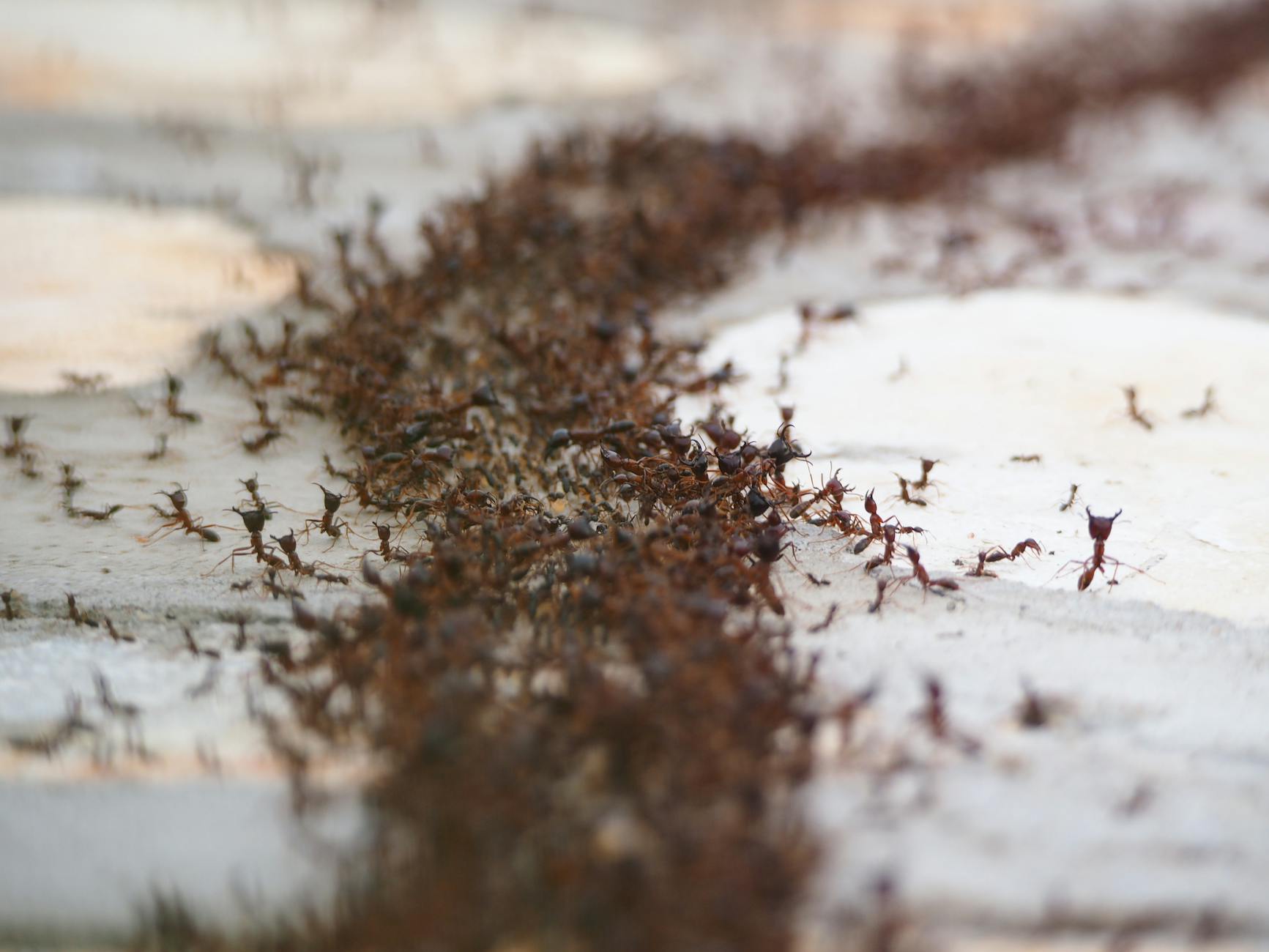
    Fire Ants

    Photo by Timon Cornelissen on Pexels.com

    Fire ants can be a issue and to anyone who has ever been bitten by one can tell you just how bad the bite hurts. If you find yourself bitten by a fire ant or even worse a colony be sure to take care of yourself and watch for any allergic reaction.

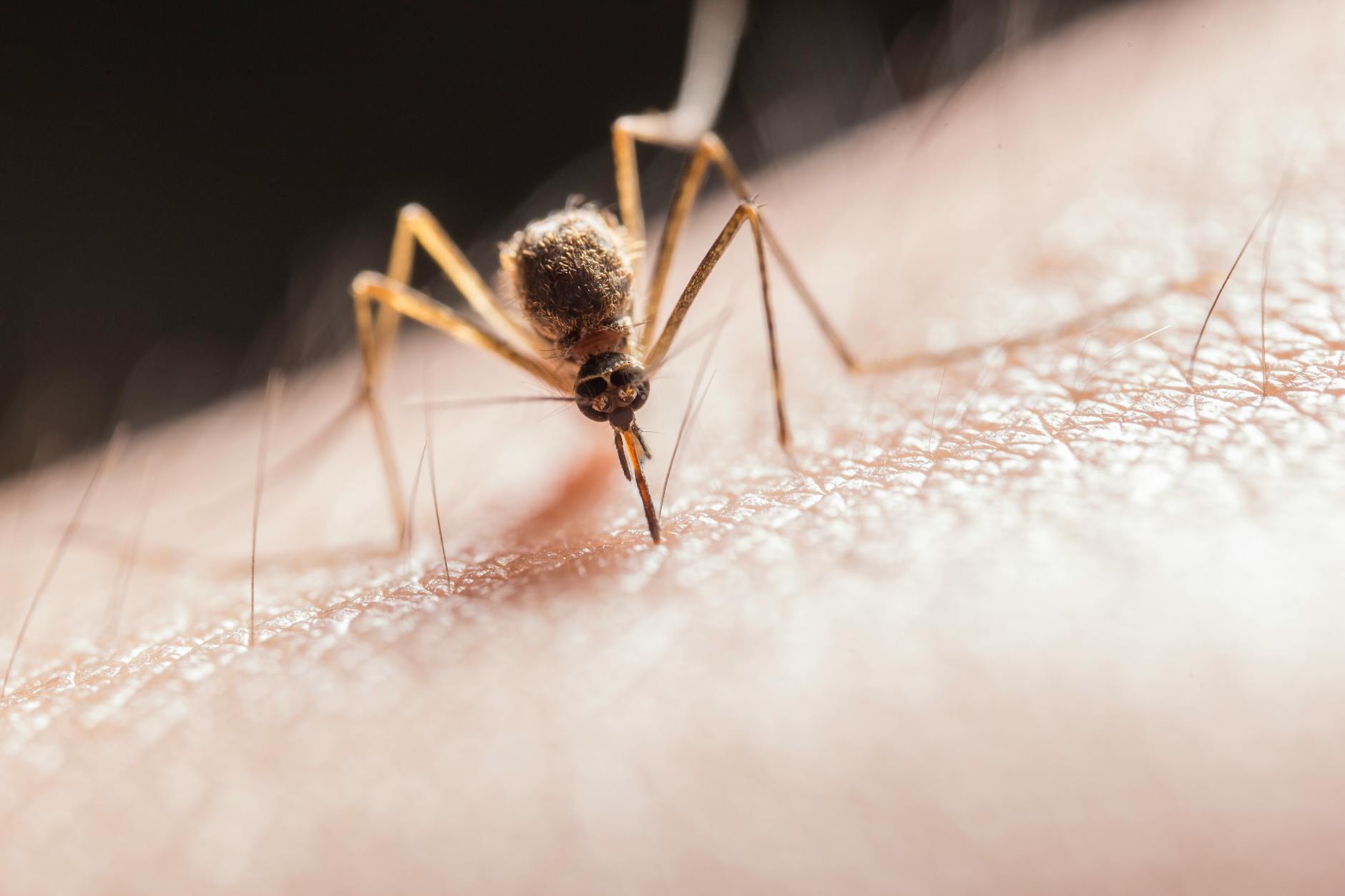
    Mosquitos

    Photo by Jimmy Chan on Pexels.com

    It is nothing uncommon to be bitten by a mosquito especially if you live in the state of Georgia. Most mosquito bites are totally safe and go away after a few days but some are not so safe. Some bites can result in infecting the host with the Zika Virus, West Nile virus and the Eastern equine encephalitis. The bite can even carry some of the most deadliest diseases like malaria.

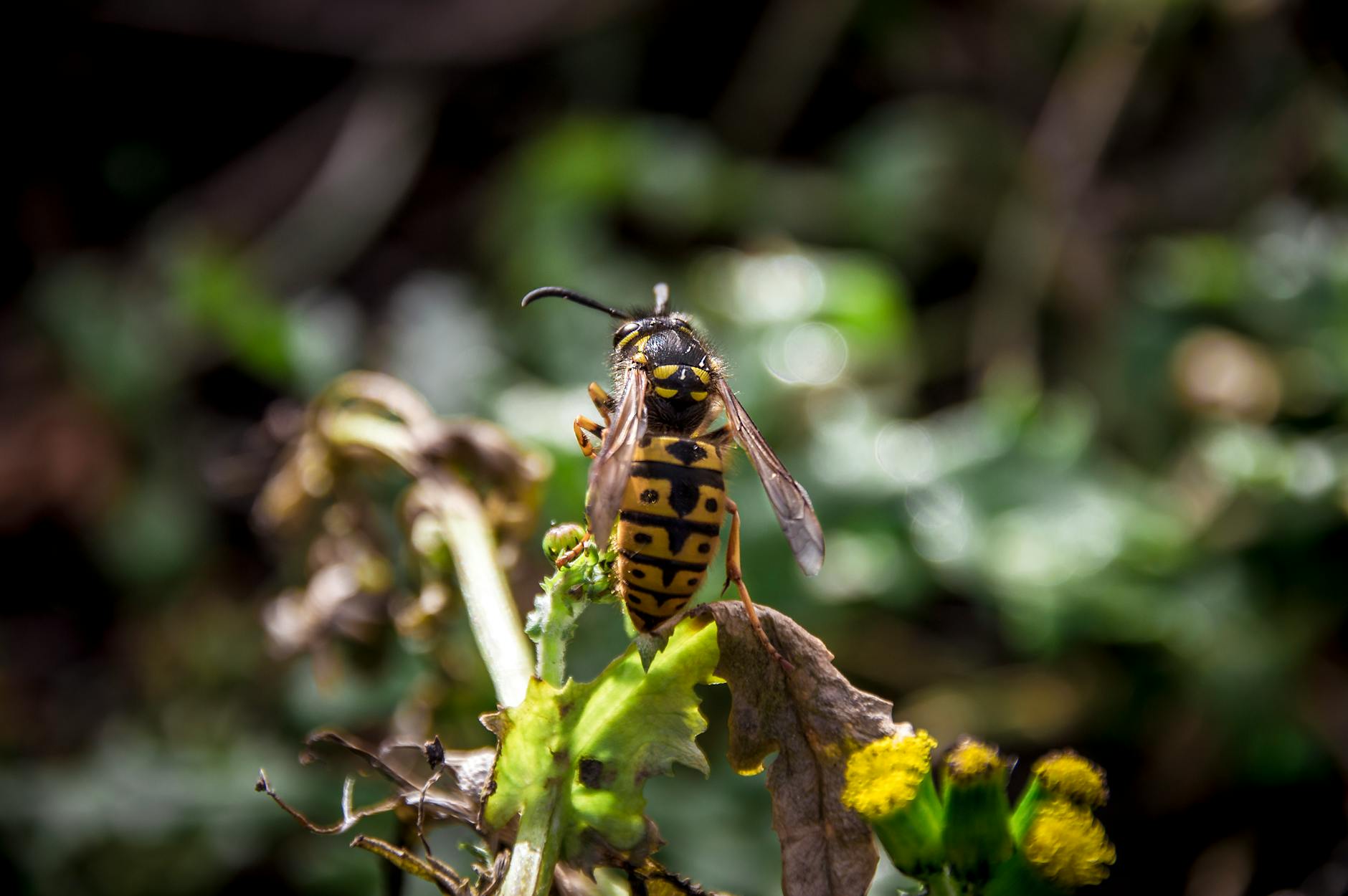
    Yellow Jackets

    Photo by Kate Bk on Pexels.com

    Yellow Jackets mostly burrow underground to make their nest and their nest can easily be overlooked resulted in many people being stung while out mowing the lawn or just doing something just as walking by the nest. Be sure if you’re stung to watch out for any signs of an allergic reaction.

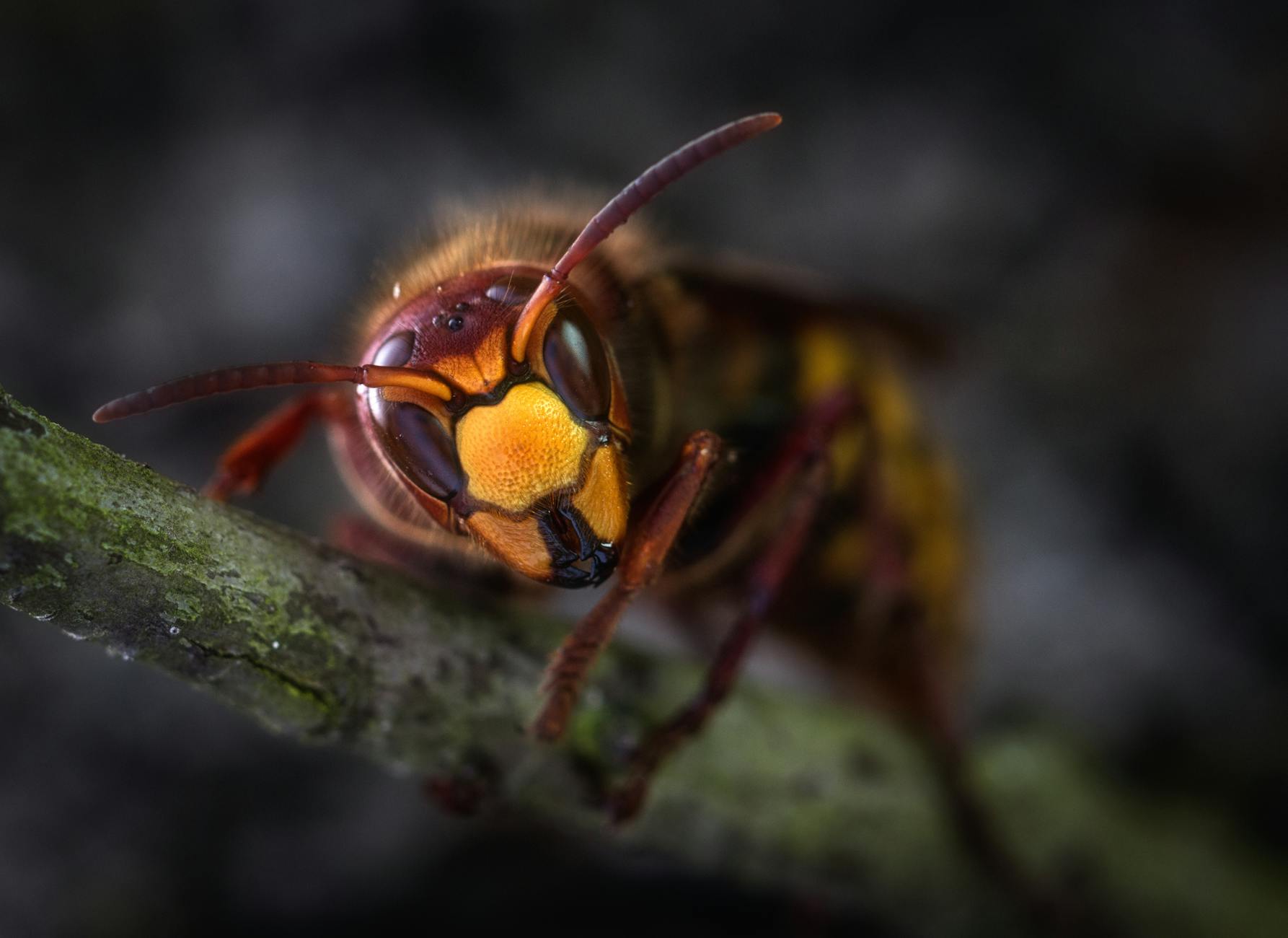
    Hornets

    Photo by David Hablu00fctzel on Pexels.com

    Just like Yellow Jackets, hornets can also bury underground to build their nest and can even build their nest in tree cavities or limbs. If you are stung be sure to watch out for an allergic reaction.