Tag: photography

  • Are Bald Eagles Actually “Bald”?

    Have you ever wondered if Bald Eagles are actually bald? Let’s find out!

    Bald Eagles get the name bald after an old English word “balde” which means white.
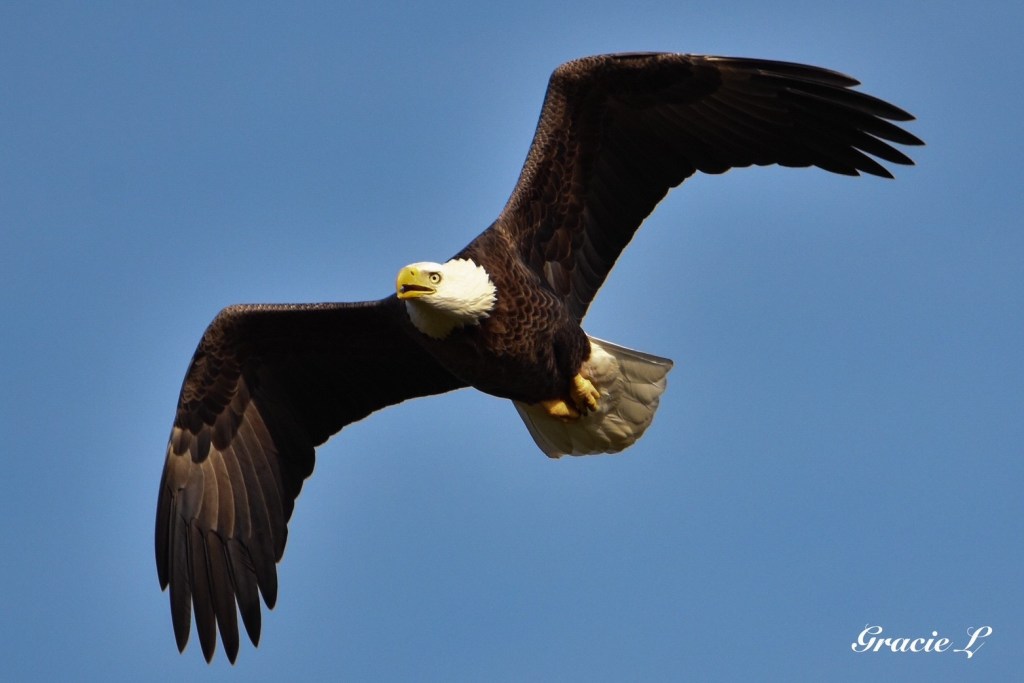
    The word bald pays tribute to these birds white feathered heads and white tail feathers which are one of the key factors that we all use to identify the species.

    So how do these guys and gals get their iconic white feathers? It’s a long but very amazing process!

    Bald Eagles are actually born with a fluffy white down but as they grow, their white down will change into a gray wooly down. This change normally happens around the first four weeks of the eaglets life.

    When the eaglet turns 5 weeks old, their black and brown feahered plumage will begin to grow out.

    Around 10 weeks old the eaglet will be fully covered in their adult dark black plumage. Some will mistaken the juvenile as a Golden Eagle.

    The “teenage” eagle will keep their dark colored feathers for the first 6 months of their life.

    After 6 months have gone by, the eagle will then begin transitioning from their dark head and tail feathers into a lighter creamish white feathers.

    The eagle will continue to molt year after year until it’s head and tail feathers are completely covered in white plumage. This normally occurs at around 5 years of age.

    So the “nest” time (oh excuse me!) The next time that ya’ll see a Bald Eagle try to remember how long of a process it is for these beautful birds to have their reigning feathers!
  • How Ducks Avoid Frostbite in Cold Waters

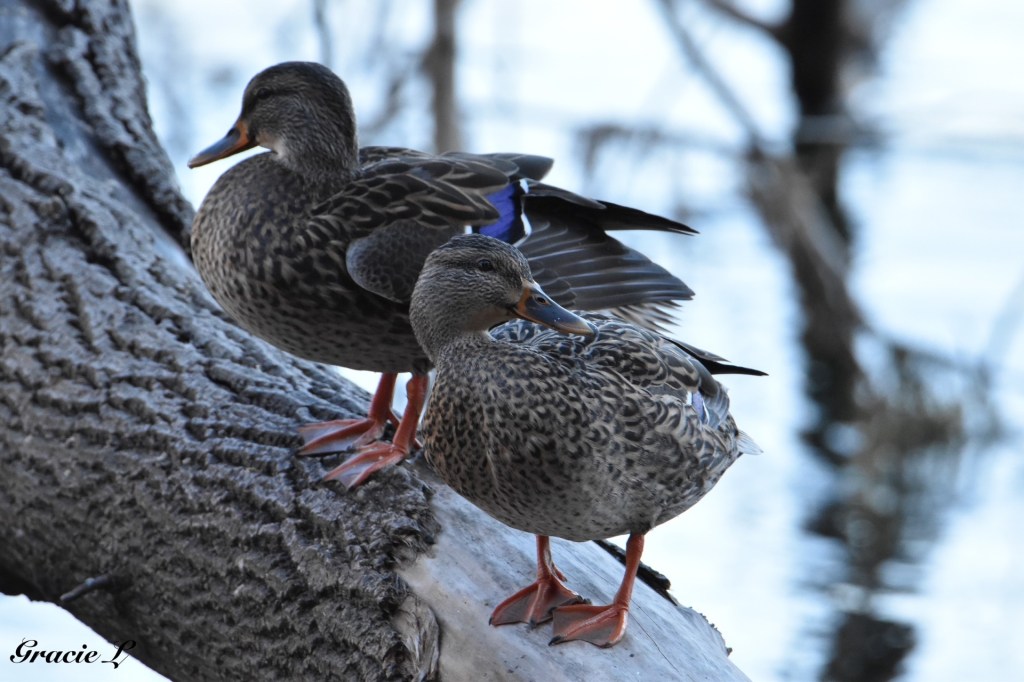
    Have you ever seen a Wild Pintail or Mallard Duck swimming and riding a river current and wondered just how do they swim in freezing cold and not get frostbite in their bare feet like us humans do? Let’s find out!

    Too much of the cold blood would bring their body temperature down which would then lead to hypothermia but ducks have another way of solving this!

    Ducks feet are not insulated through layers of fat nor feathers so with this being said, they instead rely on another source of warmth called “countercurrent”.

    As warm arterial blood rushes out of the duck’s heart and begins traveling its way to the duck’s feet, it is met closely by the rushing cold blood coming out of the duck’s feet. In birds the veins and arteries run close together therefore as they pass each other, the cold blood from the duck’s feet takes most of the heat from the artery causing the artery blood to be extremely cool before entering the duck’s leg, preventing any heat loose from the Duck’s body.

  • Georgia’s Wild Turkey Population Is in Serious Decline

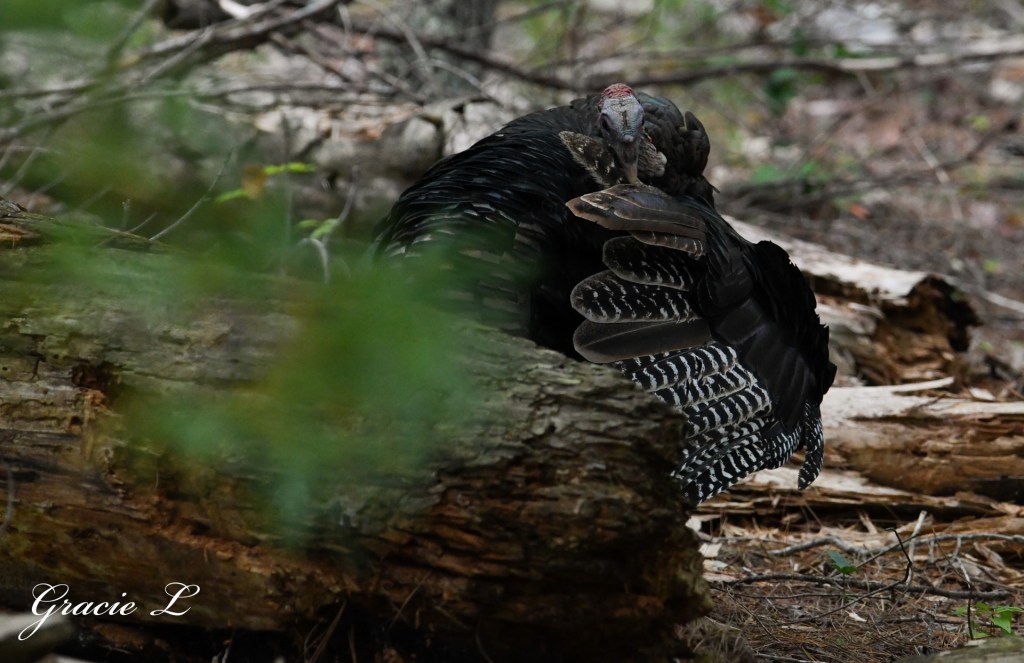
    Here in the Appalachians where I am from turkeys are becoming less and less seen. I used to see and photograph dozens of turkeys around here each year but sadly I have not photographed the first turkey this year. This put me into research mode, and this is what I found out!

    According to the Georgia Department of Natural Resource, state agencies and researchers across the state of Georgia and the Southeast have been monitoring and watching closely turkey reproduction and the turkey harvest season each year and sadly they have seen alarming declines in the populations of wild turkeys.

    The poult or “baby turkey” hatching and growing rate is a fraction of what it was two decades ago. The poult count per each mother hen average has been on the decline since the late 1990’s. The poult count per each hen is around 1/3 of what it was at its peak. The average poult count is currently around 1.5 to 1.6 per hen.

    So what is causing these severe declines in the population?

    Coyotes and other predators are a major fact to this disruption of the poult or baby turkeys as they are nothing but a treat to them. A majority of nests and broods of poults are ravaged each year.

    Habitat changes like short timber rotations, hardwood removal and suburban development has caused these birds to lose their habitats or homes making it more difficult for these guys to reproduce and thrive.

    Last but not least is illegal hunting activity. Research has shown that gobbling, which is necessary for a male to win over a female during breeding season is being disrupted by hunters who are illegally taking male turkeys “toms” in their most vunerable times.

    By removing “toms” especially dominant toms, hunters could be impacting breeding activities and therefore disrupting the turkey population.

    The Wildlife Resources Division is currently working hard to help conserve and save the population from further decline.

  • Honeybees Are Not the Only Insects That Make Honey!

    Have you ever wondered after taking a bite of nature’s delicious gold if Honeybees are the animals that can produce this delicious treat?

    The answer really has two answers both yes and no so let’s dive right on into the hive and find out!

    The answer is no Honeybees are not the only insects that make honey!

    Bumblebees make honey but it cannot be collected and used for by humans. However, Bumblebees only make enough honey for the colony to be able to survive on bad weather days when they are not safe to leave the colony.

    Another group of insects that produces honey is wasps! There are over 17 species of Wasps that produce honey and one specific species that is known for its honey is the Mexican Honey Wasp or B. mellifica. This wasp’s honey is considered a delicacy in some cultures of Mexico. They also provide pest control and help to pollinate avocados.

    Hornets and Yellow Jackets do not produce honey.

    So, as you all can see Honeybees are not the only insects that produce honey, but it doesn’t make that honey taste any less sweeter!

  • What Causes a Wild Turkey’s Feathers to Shimmer?

    Wild Turkeys are one of the most beautiful birds of the Appalachian Mountains and one of the most unique! While on your annual trip to the Appalachians you will more than likely come across one of these majestic birds as their range is everywhere at every elevation.

    So, what makes these beautiful birds feathers shimmer in multiple colors? We are fixing to find out but first let’s learn a little bit more about their feathers!

    An adult Wild Turkey is covered with five to six thousand feathers. Their feathers come in eight different shapes and several colors and sizes. Each feather group has a pattern, and these are called “feather tracts”. Feather tracts can include the tail feathers all the way to their wing feathers!

    A Wild Turkey has on average eighteen tail feathers, but that number can be greater or lesser.

    Males use their wing feathers and tail feathers to promote mating. They will flare their tail feathers in a large fan and then walk across the field while expanding their wing feathers and dragging them on the ground. They will also flare their breast and back feathers and will change their head color from blue to red.

    So, what truly causes a turkey’s feathers to shimmer in multiple colors? Let’s find out!

    A Wild Turkey’s feathers while in the sunlight shimmer multiple colors ranging from red, copper, gold, orange, green, purple all the way to bronze.

    However, the head, neck and breastbone are mostly featherless making these amazing birds even more unique!

    The feathers that they have though serve multiple purposes including but not limited to protecting them from the elements, camouflage, flight, to attract a mate and etc.

    From a baby to an adult, a Wild Turkey goes through eight different feather molts.

    Needless to say, they are very colorful birds!

  • How A Woodpecker Builds a Nest!

    Have you ever seen the cutest and tiniest black and white woodpecker? If you have, you have more than likely have just spotted a Downy Woodpecker.

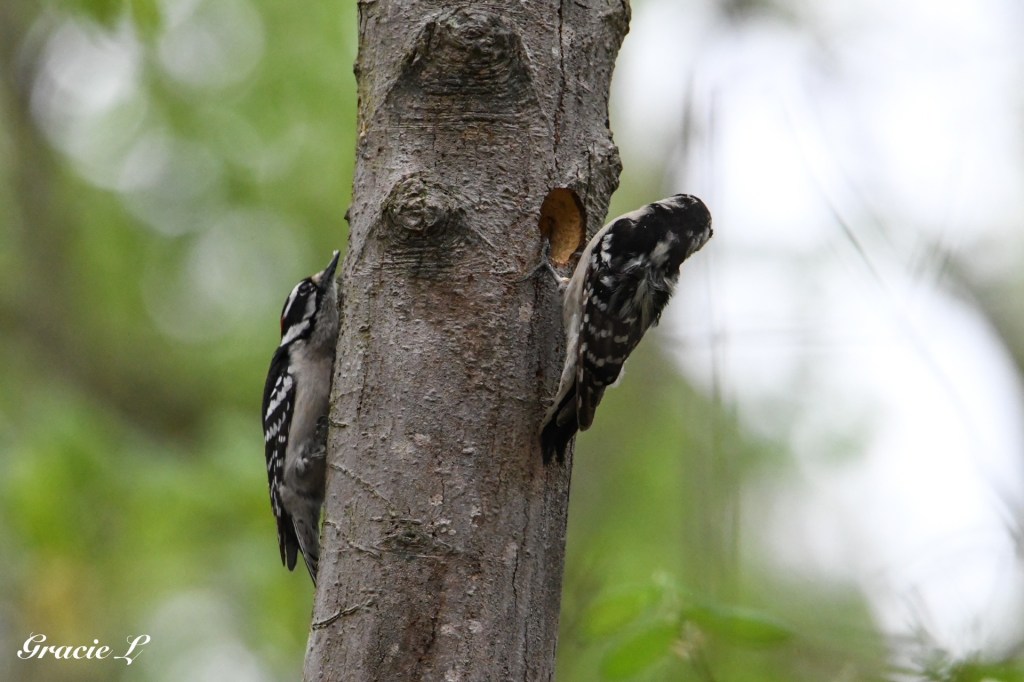
    Downy Woodpeckers are a common sight at my feeders and one couple has just recently decided to build a nest in a dead tree just a few feet from the feeders and it got me to thinking how do they build such an extravagant home? Well, we are about to find out!

    Downy Woodpeckers first begin designing their new home by choosing a wooden tree stub no more than 7 inches in diameter and that leans away to provide shelter and provides a place where they can put the entrance on the bottom.

    After choosing their new “treehouse”, the couple will then begin chipping away at the surface of the tree until they form a circular hole at the top of the tree and a circular hole entrance at the bottom. This process takes the couple one to three weeks to complete both taking turns.

    Entrance holes are about 1 to 1 1/2 inches across and the cavities will be 6 to 12 inches deep, and the cavity will widen as it goes deeper inside the nest to provide room for the eggs. The cavity will be lined with wood chips to provide cushion for the eggs.

    After completing the nest, the female will lay 3 to 8 eggs and both male and female will incubate the eggs for about 12 days.

    After hatching, the babies are born naked with pink skin and with their eyes closed. They are also born with a sharp egg tooth which helps the baby to hatch out of their eggshell.

    Both parents will bring the babies a mouth full of insects around the clock to feed the nestlings and the babies will remain with them until they are 20 to 25 days old.

  • Owls Turn Their Heads All the Way Around Without Damaging Them! Here’s How!

    Owl species including the Barred Owl do not have eyes in the back of their head so to see what’s going on around them they have to turn their head over 270 degrees in each direction and by doing this natural trick they can turn all the way around! When owls like the Barred Owl look to the left, they can turn their head all the way to the right and when they look to the right, they can rotate all the way to the left but how do they do this without damaging their neck and head?

    An owl’s neck bones or vertebrae contains holes that are much larger than they are in other birds and us humans. In humans, the holes are about the size of an artery and in owls they are ten times the size versus humans. This causes the holes to hold air sacks which helps to cushion the owl’s neck when it turns its head, and this prevents damage to their neck. If us humans did the same thing, we would more than likely have a stroke.

    So why do owls need this incredible feature? Owls have spherical shaped eyes, and their eyes are elongated tubes, and their eyes are attached in their eye sockets by bone. The tubular shape of the owl’s eyes helps the owl to have amazing binocular vision which helps in spotting prey. However, owls cannot turn or roll its eyes and instead can only look straight forward but by them being able to turn their head around allows them to get a good look around their area.

    While human arteries tend to constrict when we turn our heads very far around and with owls the arteries continued to expand which allows the blood to continue to flow and eventually pool into tiny reservoirs and these reservoirs helped minimize the restriction of blood flow and to maintain eye and brain function while the owl is turning its head.

    With all this being said the owls are truly an incredible masterpiece of nature!