Tag: politics

  • Georgia Was First Settled by Criminals!

    Did you know that the state of Georgia was first settled by criminals?

    The settlement of Georgia began with James Oglethorpe; a British soldier whose mission was to help the prisoners who were being treated poorly by the British prison system.
    Photo by KATRIN BOLOVTSOVA on Pexels.com

    Oglethorpe was a Parliament member and a humanitarian. He worked tirelessly to help the prisoners especially those who were imprisoned on minor charges for instance like imprisonment of unpaid dept and with his position in the British Parliament, it gave him the access to men to fund a debtor’s colony in the New World and after three years King George II approved it which would become the 13th colony of Georgia.

    However, Oglethorpe’s mission was put on hold when the King George stipulated that the colony must make money and return it back to the crown. Oglethorpe then gathered 114 men, women and children and set sail for the new colony of Georgia.

    The first of Oglethorpe’s ships landed in Georgia in 1732 and by February of 1733, Oglethorpe had friended the local natives and negotiated a land plot near Savannah Georgia to settle.

    Back in Britian before sailing for the new land, the colonists were gifted with cotton seeds which became the main crop of the colony of Georgia and still is one of the main crops of the state of Georgia today.

    After arriving in the new colony, Britain then sent over 60,000 men, women and children who were considered ex-convicts but only a few were sent to Georgia. The rest were sent to Maryland and Virginia to settle.

    Although Oglethorpe never reached his goal of making Georgia a dept free colony, but he did want to be certain that everyone who settled in the colony had an equal chance of becoming a prosperous citizen.

    Although, Oglethorpe never succeeded on making Georgia a place where the colonists could do for themselves, colonize and learn to trade, he did succeed on founding the colony now the state of Georgia.
  • Georgia’s Only County Named After a Woman!

    Nestled deep in the North Georgia mountains on the South Caroline and Georgia state line, just northeast of Athens and just South of Toccoa lies a very interesting county. I’m talking about Hart County.

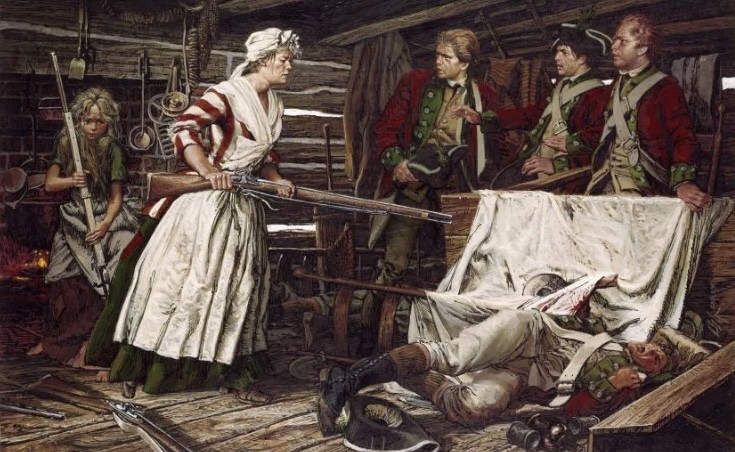
    Image by National Geographic

    Hart County is named after a woman by the name of Nancy Hart. Nancy Ann Morgan was born around 1747 and is a Revolutionary War hero. The neighboring native Americans had great respect for Nancy and even referred to her as “War Woman” or “Wahatchee” in Cherokee.

    She married a man by the name of Benjamin Hart and together in 1771, they obtained a 400-acre land grant 25 miles southeast of Hartwell and they built a log cabin home.

    Legend states that Nancy served as a spy for General Elijah Clarke and occasionally even disguised herself as a man. The most famous story about Nancy occurred during the Revolutionary War when 7 British soldiers arrived at her cabin near Wahatchie Creek. Her normal hostility toward the British was replaced that day by a cordial manner and she even offered the soldiers a meal. Meanwhile, while she was doing this, she sent her daughter to the spring for water and she sent her with a conch shell to blow which would signal a summoning for help.

    The British soldiers began to drink, while Nancy kept a good eye on them and their muskets that were carelessly stacked in the corner.

    Nancy managed to sneak two of the muskets into a space in the wall but by the time she got to the other muskets she had been caught by the British. One of the British soldiers ran after her but she was an expert marksman and dropped him to the floor another British soldier followed and she shot and injured him. The rest of the soldiers remained from provoking Nancy. Maybe it was the fact the she was 6 feet tall and red headed or maybe it was the fact that she was armed and they weren’t. Either way Nancy kept them contained while she waited on her husband and his friends to arrive.

    Although this was said to be a legend, after a work crew building the railroad unearthened the truth, it is safe to say that this was not in fact a legend but in fact the truth!

    Nancy worked tirelessly on helping her newborn country doing so many things, from tying logs up with grapevines to be able to cross the Savannah River to collect the badly needed information to even dressing up as a man and protending that she was crazy just to get into the British Camp and to collect vital information on the British troop movements.

    Nancy was even related to Daniel Boone and Colonel John Dooley

    The natives even named the creek that ran by her home “Wahatchee” after Nancy which is now apart of the Georgia State Park Nancy Hart State Park and the replica cabin can be seen today and the original stones from the chimney of the original were used in the remaking of the cabin as well.

    The representation of Nancy Hart may be seen on the Hart County Seal. The seal was designed by Robert W. Knowles and was adopted as the official seal on May 8, 1990.

  • Georgia’s Sherman Neckties: A Burning Civil War Tactic!

    Sherman’s Necktie was a way of railway-destruction that was used by General William Tecumseh Sherman during the Civil War.

    General Sherman was responsible for the “March To Sea” all the way to Savannah and the burning of Atlanta, Georgia.

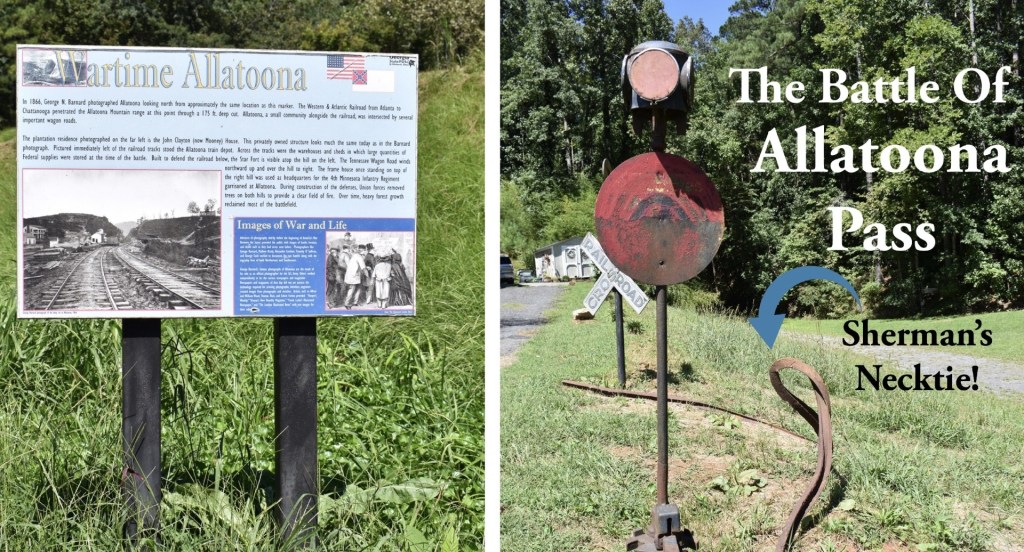
    To this day, you can still see Sherman Railroad Neckties in the state of Georgia.

    The neckties were formed when Union Troops heated railway rails until they were able to be bent.

    After the Union Troops heated the rails, they would take the rail and wrap it around a tree and bend it around into a necktie or loop if you will.

    Surprising enough though, General Sherman did order destruction during the “Atlanta Campaign”.

    However he did not order the destruction of the railroad ties. This is what he said.

    “In case of the sounds of serious battle Major-General Mcpherson will close in on General Schofield but otherwise will keep every man of his command at work in destroying the railroad by tearing up track, burning the ties and iron, and twisting the bars when hot. Officers should be instructed that bars simply bent may be used again, but when red hot they are twisted out of line they cannot be used again. Pile the ties into shape for a bonfire, put the rails across and when red hot in the middle, let a man at each end twist the bar so that its surface becomes spiral.”

    Wm. T Sherman, Special Field Orders, July 18, 1864

    Three days after this letter from Sherman was sent only 1 railroad remained intact into Atlanta but there was something that the Union forgot.

    The Confederates gained knowledge of what the Union was doing and returned the favor by using the same tactics against Sherman’s supply line, the Western and Atlantic Railroad from Chattanooga, Tennessee to Atlanta, Georgia in the early days of the Franklin-Nashville Campaign in late 1864.

    The Confederate recalled their twisted ties as “Old Mrs. Lincoln’s Hair Pins.”

    So, the next time that you come across a twisted railroad tie, it could be one of Sherman’s Neckties or one of “Old Mrs. Lincoln’s Hair Pins.”